Eurail Pass Cost: What You’ll Really Pay in 2025
The Eurail pass cost is the first number travelers Google before a European rail trip, and it is also the easiest figure to get wrong. The headline price you see on the website is never the full amount you will spend, because seat reservations, class upgrades, and your own itinerary all move the final bill by a lot. This guide breaks down what the pass actually costs right now, where the hidden fees live, and how to tell whether a pass will save you money or quietly lose you some.
A Eurail pass is a rail ticket product sold by Eurail B.V., not a train company. It gives you unlimited rides on the national railway networks of 33 European countries for a set number of travel days, and it works out to be either a genuine bargain or an overpriced souvenir depending entirely on how you travel. Before you hand over your credit card, understand the real numbers.
What a Eurail Pass Is (and What It Doesn’t Cover)
The pass covers participation in the Eurail network, which includes almost every train operator in Western and Central Europe: SNCF in France, Trenitalia in Italy, Deutsche Bahn in Germany, Renfe in Spain, ÖBB in Austria, and SBB in Switzerland, plus regional and local services across 33 countries. Buses, trams, metro systems, and most ferries are not included, though a handful of ferry routes (Greece–Italy, for example) offer passholder discounts rather than free travel.
Since 2021, Eurail passes are digital only. You manage the pass inside the Rail Planner app, activate a travel day, add the specific train you plan to board, and show a QR code to the conductor. Paper passes are gone.
The two big structural choices are flexi versus continuous, and the country coverage:
- Eurail Global Pass: all 33 participating countries. The default choice for multi-country trips.
- One Country Pass: a single nation (Italy, France, Germany, Spain, and several others). Usually cheaper than a Global Pass and often a better fit if you are staying in one country.
- Flexi pass: a fixed number of travel days to use within a wider window (for example, 7 days within one month). Travel days are consumed only on days you actually board a train.
- Continuous pass: every day counts from day one, for 15 days up to three months.
Eurail Pass Cost by Pass Type
Adult second-class prices move with the exchange rate, but they sit in a narrow, predictable band. Expect to pay roughly:
- 4 travel days within 1 month: about €290 / $315
- 7 travel days within 1 month: about €375 / $405
- 10 travel days within 2 months: about €450 / $485
- 15 travel days within 2 months: about €510 / $550
- 15 continuous days: about €475 / $515
- 1 month continuous: about €620 / $670
- 2 months continuous: about €690 / $745
- 3 months continuous: about €840 / $900
First class runs roughly 40–50% higher across the board. A 7-day Global Flexi pass in first class is around €550 / $595, and a one-month continuous first-class pass lands near €890 / $960.
Here is a side-by-side look at the four most common configurations:
| Factor | 4-Day Flexi (1 month) | 10-Day Flexi (2 months) | 15-Day Continuous | 1-Month Continuous |
|---|---|---|---|---|
| Approx. adult 2nd class | $315 | $485 | $515 | $670 |
| Travel-day flexibility | Use any 4 days | Use any 10 days | Every day counts | Every day counts |
| Best for | Weekend-heavy multi-country hops | Longer trips with rest days | Packed two-week routes | Slow travel, gap years |
| Reservation cost risk | Higher per trip | Moderate | High (daily trains) | High |
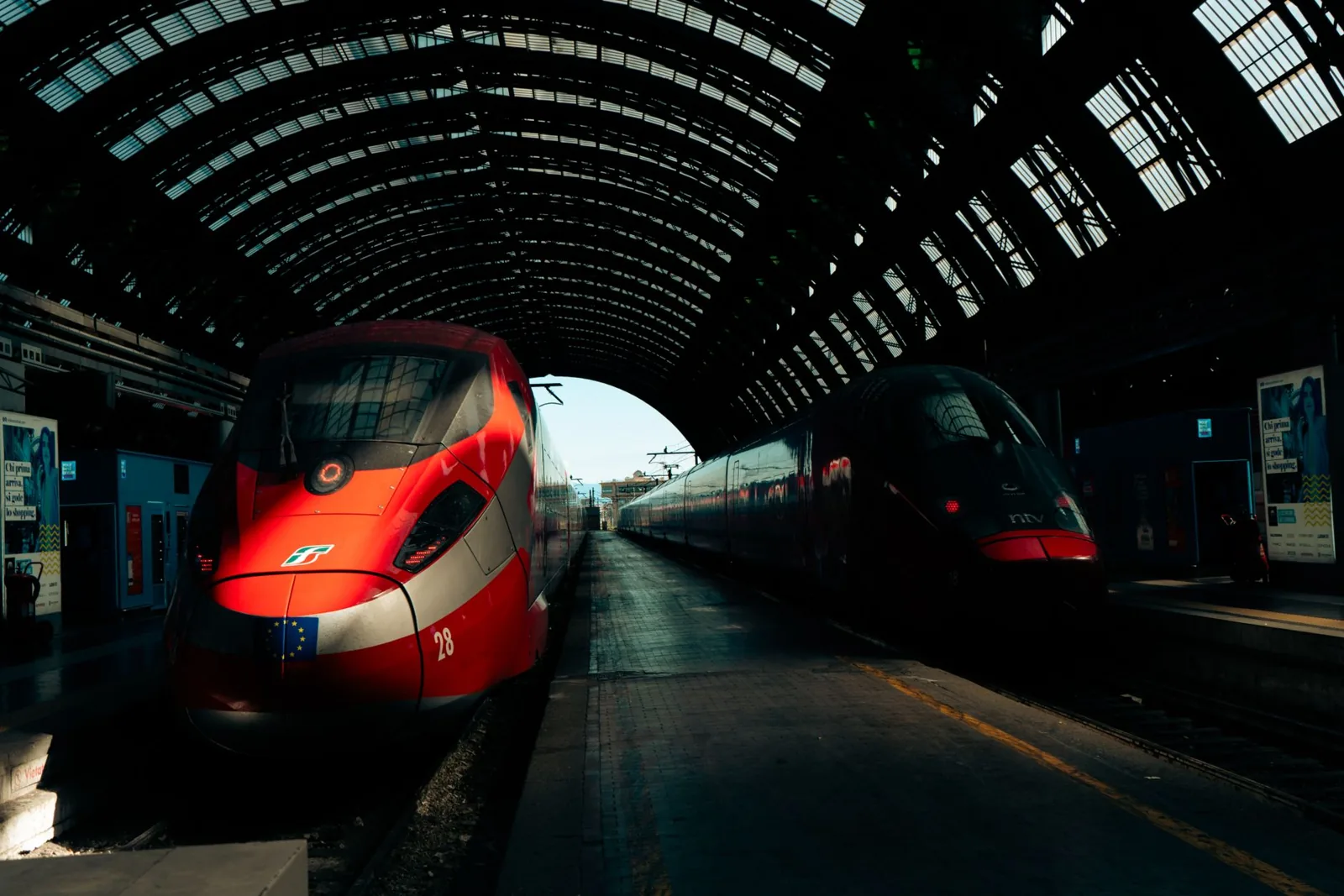
Photo by Yender Fonseca via Pexels
The Hidden Eurail Pass Cost: Seat Reservations
Here is where the sticker price parts ways with reality. On many routes, the pass covers the fare for the journey but not the guaranteed seat. High-speed, night, and many international trains require a separate seat reservation, and you cannot board without one.
Reservation fees for standard second class, as of 2025:
- France TGV InOui / Intercités: €10–€20 domestic, up to ~€35 on cross-border TGV
- Italy Frecciarossa, Frecciargento, Intercity: €10–€13
- Spain AVE / Alvia: €10–€23.50
- Germany ICE / Intercity: optional, around €5.90
- Eurostar (London–Paris/Brussels/Amsterdam): about €30, with a limited quota of passholder seats per train
- Switzerland and Austria: mostly no reservation needed on domestic trains
- Night trains (Nightjet, Cale d’Or, etc.): €20 for a seat, €40–€100+ for couchettes and private sleepers
A traveler taking eight high-speed legs across France, Italy, and Spain could easily add €100–€150 of reservations on top of the pass. That does not make the pass a ripoff — it is simply part of the true cost, and comparing a pass to advance tickets needs to include it. For a fuller look at the trade-off, see our breakdown of train vs. plane costs and whether the train is actually cheaper than flying.
First vs. Second Class: What the Jump Costs
Second class is comfortable on most European networks: wider seats than a budget airline, power outlets on the newer stock, and quiet cars available on many routes. First class buys you bigger seats in 2-and-1 configuration, fewer passengers per car, and on some operators (SNCF, ÖBB) complimentary snacks, drinks, or newspapers.
The price gap is meaningful. On a 10-day Global Flexi pass, first class adds roughly $200 over second. The honest advice: spend that money on seat reservations and a nicer hotel room instead, unless you are traveling at peak season or on routes where second class fills up and you want guaranteed space. For most leisure travelers, second class plus a reservation on the busy legs is the better use of the same budget.
Youth, Senior, and Family Discounts
The Eurail pass cost drops noticeably for certain groups:
- Youth (under 28): about 23–25% off the adult price. A 7-day Global Flexi second-class pass runs roughly €285 / $310 for youth.
- Senior (60+): about 10% off, with first-class-only pricing on most senior passes.
- Children (4–11): free with an adult — up to two children per adult on most passes.
- Children under 4: ride free with no pass required.
The child-free policy is the sleeper deal here. A family of four traveling France–Italy–Switzerland can put two kids on the train at zero marginal cost, which frequently tips the whole comparison in the pass’s favor even when two adult point-to-point tickets would have been cheaper.
Photo by Jean-Paul Wettstein via Pexels
Is a Eurail Pass Worth the Cost?
The pass is a math problem, not a lifestyle purchase. Run the numbers before you buy.
When the pass wins:
- You are visiting three or more countries and want the freedom to hop a train on short notice.
- Your dates are not locked down, and flexible travel is worth paying a premium for.
- You are traveling with children, which makes their tickets free.
- You plan to use lots of shorter regional legs, which would be individually cheap but add up fast.
- You trip over a seasonal sale — Eurail runs promo discounts of 10–20% fairly regularly.
When point-to-point tickets beat it:
- You have a fixed two- or three-city itinerary booked months in advance.
- Budget airlines or advance fares (Trenitalia’s regional and Frecciarossa promotions, SNCF’s OUIGO, Flixbus) are cheaper for your specific routes.
- You are spending most of your time in one country that has cheap national ticket prices, like Portugal or Poland.
- You are visiting fewer than four cities — a pass rarely pays off below that.
For a step-by-step approach to planning the rail side of the trip, our guide to traveling Europe by train covers routing, apps, and booking strategy in detail.
How to Buy and Where the Best Price Lives
Eurail passes are sold directly through eurail.com and through a network of official resellers. There is no secret discount retailer that undercuts the official price by a wide margin; the real savings come from timing and pass selection, not the storefront.
Buy directly from Eurail, pay in euro if your card offers a fair conversion rate (paying in your home currency often adds a 3–4% markup via dynamic currency conversion), and watch for the seasonal promotions that pop up around Black Friday and the January sales season. Always check the current rate on the day you buy, because the prices above are live estimates that drift with the euro-to-dollar exchange rate.
Authoritative planning resources like Rick Steves’ guide to rail passes and Lonely Planet’s Europe train travel primer are worth bookmarking when you compare passes against advance fares.
Frequently Asked Questions
How much does a Eurail pass cost in 2025?
A Global Pass ranges from roughly €290 / $315 for four travel days within a month up to about €840 / $900 for three continuous months in second class, with youth, senior, and child discounts available.
Is a Eurail pass worth it for one country?
Often not. Single-country tickets in places like Portugal, Poland, and the Czech Republic are cheap enough that a Global or One Country Pass rarely pays off unless you are riding daily.
Do I have to pay extra for seat reservations?
On high-speed, night, and many cross-border trains, yes. Budget roughly €10–€35 per reservation in second class, and €30 for Eurostar, and add that to the pass price before comparing.
Is the Eurail pass really unlimited?
It is unlimited in terms of number of trains within a travel day, but seat availability on reservation-only trains is capped for passholders, so popular summer routes can sell out of passholder seats.
Can I buy a Eurail pass at the station?
No. Passes are app-only and must be purchased before you activate a travel day; you can buy at any time and activate later, but you cannot buy at a ticket counter.
The Bottom Line
The Eurail pass cost is best understood as two numbers: the pass itself, and the reservations that ride on top of it. For a flexible multi-country trip with kids, the pass is frequently the cheapest and most pleasant way across Europe. For a fixed two-city hop booked far in advance, it is usually the wrong tool.
Total up your expected legs, add the reservation fees for every high-speed and night train, and compare the sum against advance fares before you commit. Do that one piece of arithmetic, and you will know within ten minutes whether the pass saves you money or just feels romantic.
Ready to plan the rail leg of your trip? Start with our full guide on how to travel Europe by train and our breakdown of Amtrak ticket prices if the US side of your journey is next.