Train vs Plane Cost: Which Is Cheaper in 2026?
The train vs plane cost question seems simple until you actually try to answer it for a specific route. A $49 flight ticket can end up costing $140 once you add bag fees, seat selection, and the Uber ride from an airport that sits 25 miles outside the city center. A $79 train fare, by contrast, often lands you in the middle of downtown with nothing extra to pay.
That gap is why “which is cheaper” almost never means “which ticket has the lower sticker price.” It means: what do you pay door-to-door, and what do you get for it. This guide breaks the train vs plane cost comparison down by real routes, real fares, and the extra fees most people forget until they are standing at the check-in counter.
I have split it into US corridors, where trains are a genuinely competitive option on only a handful of routes, and Europe, where rail is often the default choice even when it is not the cheapest on paper.
When the Train Beats the Plane
On short and medium corridors, the train frequently wins on total cost once you stop looking only at the fare. Three things tip the balance.
First, city-center stations. A train leaves from and arrives at stations that are usually a short walk from where you are actually going. Airports routinely sit 15 to 40 miles outside town. In the UK, London Gatwick is a 30-minute express train from central London; Heathrow is 15 to 20 minutes. By contrast, Paris Gare de Lyon and Amsterdam Centraal dump you directly in the middle of those cities. That transfer cost — a train ticket, a taxi, or a rideshare each way — adds $20 to $60 per person per trip.
Second, baggage. Most trains let you carry your bags with no fee and no real weight drama. Airlines, especially low-cost carriers, charge $30 to $75 per checked bag each way. A family of four checking two bags can add $240 to an otherwise cheap round trip.
Third, no seat-selection and change-fee games. On a train you buy a ticket and sit down. On budget airlines, exit rows, reserved seats, and even priority boarding carry fees. None of this shows up in the headline fare.
The result: a $120 train ticket can beat a $60 flight because the flight’s true cost, after bags and transfers, is $130 to $180.
Train vs Plane Cost on US Routes
American rail is a mixed bag. On the Northeast Corridor, Amtrak is honestly priced against flying. Everywhere else, it is often slower than flying and sometimes more expensive.
Here is how two representative routes stack up, using typical advance-purchase fares for fall 2026.
| Factor | Amtrak Acela (NYC–DC) | Flight (NYC–DC) |
|---|---|---|
| Typical advance fare | $90–$150 | $60–$110 |
| Baggage fee | $0 (carry-on) | $0–$35 |
| City-center transfer | $0 | $15–$25 (ex.: Reagan) |
| Door-to-door time | ~3h 15m | ~3h 30m–4h |
| Real total cost | $90–$150 | $100–$170 |
The Northeast Corridor is the one place where US rail holds its own. On a New York to Washington run, the Acela takes about three hours downtown-to-downtown. A flight might technically be 75 minutes in the air, but you lose an hour to security and another 30 to 45 minutes getting from an airport to the city center. When you add it up, the cheap plane ticket stops looking cheap.
Move west, and the picture flips. A Denver to Salt Lake City flight runs 90 minutes and often costs under $100 round trip. There is no direct passenger train on that route at all, and the once-daily California Zephyr-style segments that do exist take the better part of a day. For most of the US outside the Northeast, the train vs plane cost debate is already decided by geography, not price.
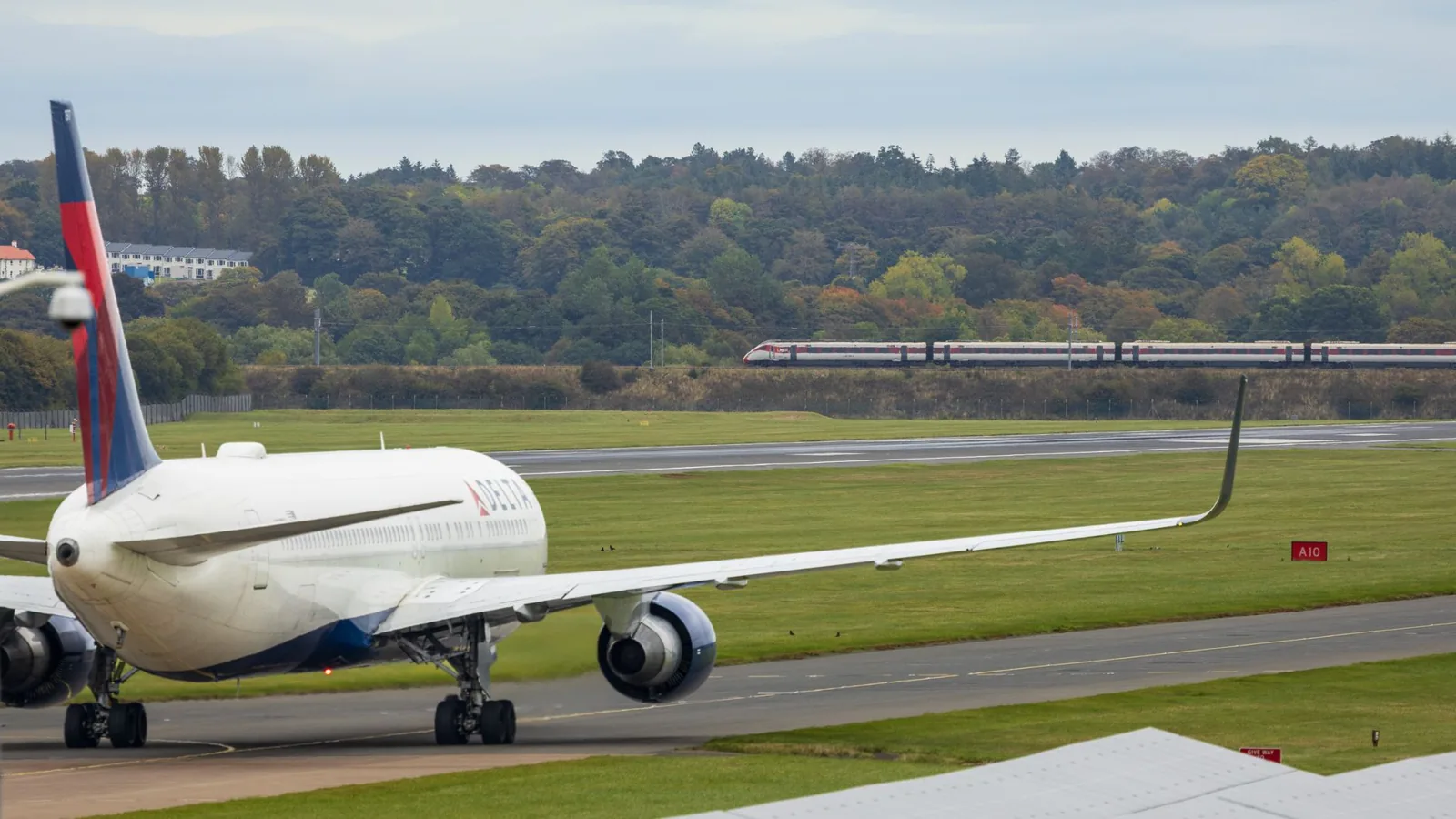
Photo by Dan Wright via Pexels
If you want to dig into what specific Amtrak routes actually cost, see our breakdown of Amtrak ticket prices. And for the broader question of whether rail genuinely undercuts flying, we walk through it in is the train cheaper than flying?.
Train vs Plane Cost in Europe
Europe is where the train usually makes the strongest financial case, though budget airlines like Ryanair and easyJet keep it competitive. A few real examples, based on advance bookings for fall 2026:
- London to Paris (Eurostar). Around $59 to $99 one way booked three to four weeks out. A budget flight can be $40 to $70, but bag fees, the Gatwick or Luton transfer, and time mean the train often wins on total cost.
- Madrid to Barcelona (AVE). Spanish high-speed fares run roughly $35 to $95 one way, and the ride is 2.5 to 3 hours. A flight is quicker in the air but the airports — Barajas and El Prat — add real transfer time and cost.
- Amsterdam to Berlin. Direct trains from $39 to $90 one way. Flights are frequently cheaper on paper, but the train deposits you in the center of both cities in about six hours.
For multi-stop trips, a rail pass can tilt the numbers hard. See our guide to what a Eurail Pass costs to work out whether point-to-point tickets or a pass save you more.
The Fees Nobody Prices In
When you actually run the train vs plane cost numbers, the fares tell only half the story. These are the line items that decide the real winner.
- Getting to the airport vs. the station. Budget $20 to $60 each way for an airport transfer. The station transfer is usually $0 to $10.
- Bag fees. $0 on almost every train; $30 to $75 per checked bag each way on budget carriers, less on full-service carriers inside Europe.
- Seat and name-change fees. Ryanair and easyJet charge for seat selection and repeatedly charge to change anything. Trains generally absorb these or charge a small flat fee.
- Food and drinks. Trains let you bring your own; planes restrict liquids over 100 ml and charge $4 to $15 for a sandwich.
- Time. The train vs plane cost comparison is also a time comparison. A two-hour train ride with no security line often beats a one-hour flight with two hours of airport friction.
None of this is exotic. It is the difference between a headline $39 fare and a real $120 day of travel.
When Flying Actually Wins
The train is not always the right answer, and pretending otherwise makes you a bad travel writer.
Long distance. For anything over roughly 500 miles, flying wins on time almost every time. Lisbon to Warsaw is a three-hour flight or a 24-hour rail odyssey through multiple connections.
Routes without direct rail. In the US, most city pairs have no useful train option. In Europe, cross-border gaps — think the Iberian Peninsula’s gauge breaks or direct links between smaller cities — still force awkward transfers.
Last-minute travel. Rail prices climb steeply in the final days before departure. If you book a train three days out, you can pay two to three times the advance fare, at which point a last-minute budget flight may be cheaper.
Time-sensitive trips. If you have 48 hours in a city, you cannot spend 14 of them on a train.
The honest rule: on corridors under about 300 miles with direct rail, compare both. Over that distance, check the flight first and treat the train as a scenic or relaxation choice, not a money-saver.

Photo by Saya Azeem via Pexels
How to Actually Compare Prices
Do not compare a train’s walk-up fare against a flight’s sale fare. To make the train vs plane cost comparison fair, do this:
- Pick the same date and roughly the same time of day for both.
- Price the flight with the exact bag and seat you would buy, not the bare-bones fare.
- Add the cost of getting from each airport and station to your final destination.
- Add the value of your time — say $15 to $30 an hour — to the slower option.
- Book trains three to four weeks out where possible; that is where the cheapest advance fares live.
Tools like Kayak and Rome2Rio will line the two options up side by side, but neither includes all the transfer and bag math for you. Do the last mile in a spreadsheet.
Frequently Asked Questions
Is the train or plane cheaper on short trips?
On short trips, the train is usually cheaper in real terms. The fare may look higher, but no bag fees, no airport transfer, and no seat-selection charges typically make the train the better total value on corridors under about 300 miles.
Is Amtrak cheaper than flying?
On the Northeast Corridor, Amtrak is often genuinely competitive with flying once you add airport time and transfers. Outside the Northeast, Amtrak is frequently slower and sometimes more expensive than a flight, so compare route by route. Our Amtrak ticket prices guide has the details.
How far ahead should I book a train to get the cheapest fare?
Book three to four weeks ahead for the best advance fares, especially on European high-speed routes and Amtrak. Last-minute rail tickets can cost two to three times the advance price.
Do train tickets include baggage?
Almost always, yes. Most trains include at least one large carry-on or suitcase in the ticket price with no weight fee, which is a major hidden advantage over budget airlines.
Is a rail pass worth it for a multi-city trip?
For trips with three or more city stops, a rail pass often beats buying point-to-point tickets, but you have to price it out. See our Eurail Pass cost breakdown to run the numbers.
The Bottom Line
Train vs plane cost is never a one-line answer, but a few patterns hold. The train wins on real cost over short and medium corridors, in Europe especially, and anywhere the airport sits far from town. The plane wins on long distances, routes with no direct rail, and last-minute trips.
Before you book, price the flight with the exact luggage and seat you will actually buy, add the airport transfers, and put that number next to the train’s honest total. In most cases under 300 miles, the gap closes to a wash — and the train usually comes out ahead once you factor in the hours wasted at either end of a flight.
For planning help, start with our guides on traveling Europe by train and what a Japan Rail Pass costs. Run your exact route through a fare comparison tool like Kayak and cross-check the train’s advance fares, then book the option that wins on your own numbers, not the headline price.