Backpacking on a Budget: How to See the World Without Going Broke
Backpacking on a budget is not about white-knuckling every dollar or sleeping on benches to make rent back home. It’s about making deliberate choices: where you go, when you book, what you carry, and how you eat. Get those decisions right and you can roll through Southeast Asia, the Balkans, or Central America for less than you’d spend on a quiet weekend in an expensive US city.
The biggest misconception is that budget backpacking means suffering. It doesn’t. Dorm beds in a well-run hostel run $8 to $18 a night, street food costs $2 to $4, and a full day of buses, entry fees, and meals in countries like Vietnam or Bolivia can land under $30. The trick is knowing where the money actually leaks out and plugging those holes before you go.
This guide breaks down what budget backpacking costs in practice, where to spend your weeks, how to book transport and beds cheap, and how to eat and pack so you’re not bleeding cash by day ten.
What Backpacking on a Budget Actually Costs
The numbers depend almost entirely on region, not on how “cheap” you imagine yourself to be. Here’s a realistic picture of daily spend for a solo traveler, assuming dorm beds, street and market food, and local transport.
| Factor | Southeast Asia | Eastern Europe | Western Europe |
|---|---|---|---|
| Dorm bed per night | $8–$15 | $12–$20 | $25–$45 |
| Food per day | $6–$12 | $10–$18 | $20–$35 |
| Local transport | $3–$8 | $5–$12 | $12–$25 |
| Total daily budget | $25–$40 | $35–$55 | $60–$100 |
These are travel-day averages, not survival floors. In Northern Thailand or Laos you can live well on $25 a day. In Switzerland or Iceland the same lifestyle easily tops $100. The single biggest lever you control is geography, so treat this table as a planning tool, not a promise.
Set a weekly budget, not a daily one. Chasing a strict daily number leads to misery the one day your bus breaks down and you pay $20 for a last-minute ride. Give yourself a cushion of 10 to 15 percent for the days when things don’t go to plan, because they will.

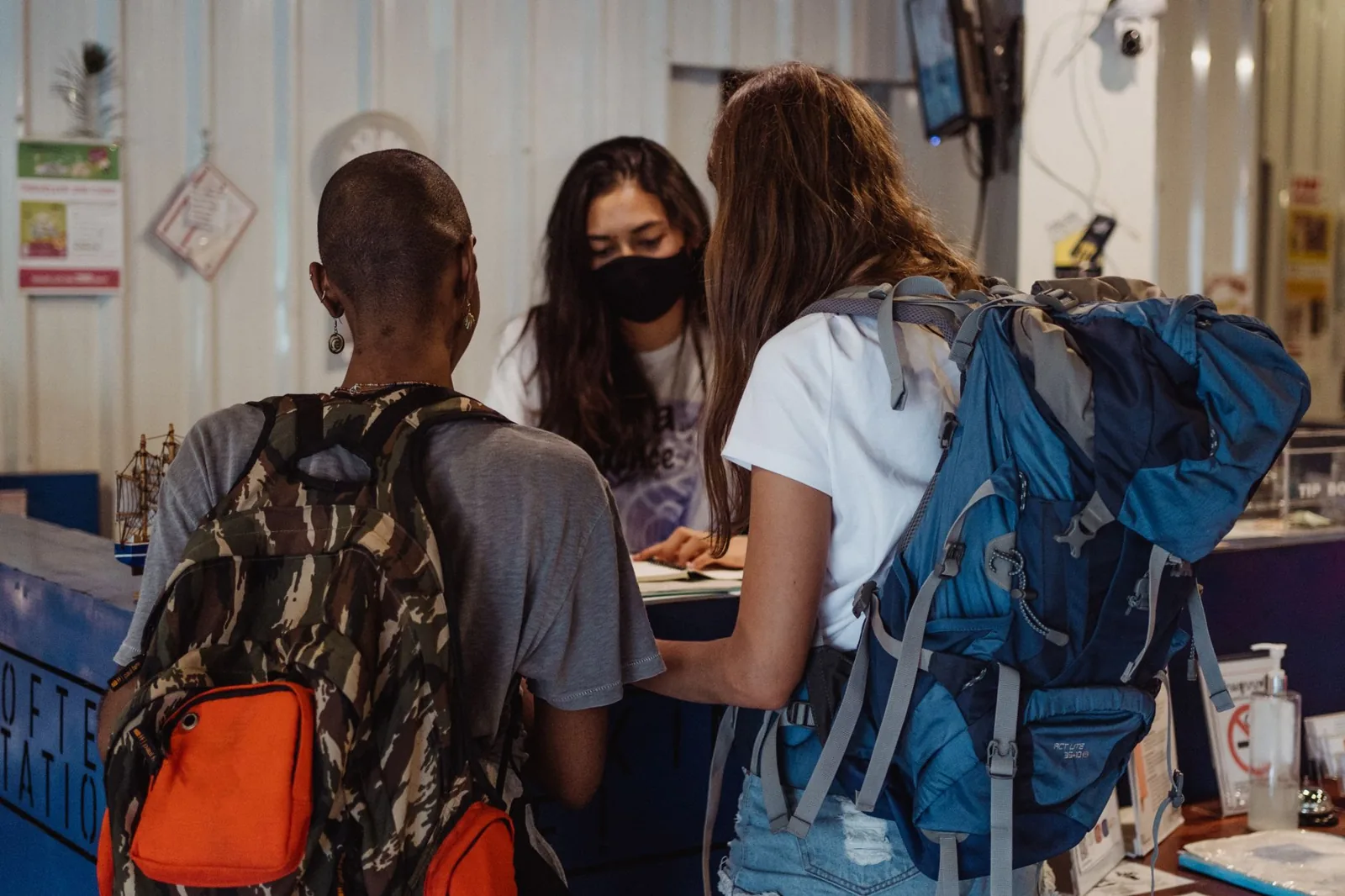
Photo by Ketut Subiyanto via Pexels
Choose Budget-Friendly Destinations First
You can’t out-hack a destination that’s expensive to exist in. Your money lasts two to four times longer in Hanoi than in Stockholm, no matter how many loyalty points you burn. Start with regions where your currency does heavy lifting.
Strong bets for a first-time budget backpacker:
- Southeast Asia — Thailand, Vietnam, Cambodia, Laos, and Indonesia. Warm, safe, and dense with hostels and cheap intercity buses.
- The Balkans — Albania, North Macedonia, northwestern Greece, and parts of Montenegro deliver Western-adjacent comfort at a fraction of the price.
- Central America — Guatemala, Nicaragua, and parts of southern Mexico are cheap, compact, and easy to navigate on chicken buses and shared shuttles.
- Eastern Europe on the fringe — Romania, Bulgaria, and parts of Poland still feel like a bargain compared with the eurozone.
Avoid leading with expensive backpacking stereotypes. Tokyo, Auckland, and every Swiss canton are wonderful, but they’ll torch a $50 daily budget in an afternoon. Save them for later, or budget them as short, planned splurges rather than default stops. For a deeper look at which countries stretch your cash furthest, see our roundup of budget travel destinations.
How to Book Cheap Flights and Transport
Transport is where most backpackers quietly overspend by hundreds of dollars. The fixes are unglamorous but they work.
Flights. Be flexible on dates and airports. Skyscanner, Google Flights, and Kayak let you search “whole month” or “everywhere” so you can shift a departure by three days and save $120. Book the long-haul legs early (six to eight weeks out is usually the sweet spot), and be genuinely open to budget carriers like AirAsia, Scoot, and Ryanair — just read the baggage rules before you click buy, because fees are where they profit.
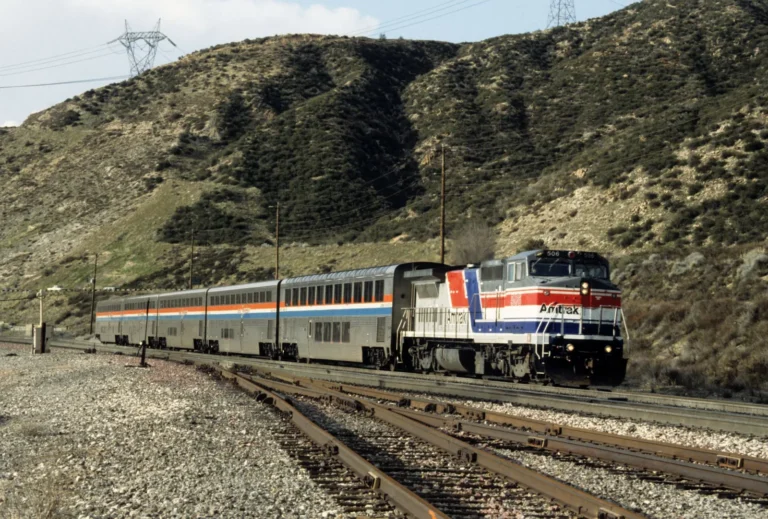
Overland. Once you’re on the ground, buses, night trains, and shared vans almost always beat flying on cost and often on scenery. A $14 sleeper bus in Vietnam or an overnight train in India doubles as a night’s accommodation, so you pay for transport and a bed in one ticket.
City moves. Use local metro and buses over taxis. Apps like Grab and Bolt are still cheaper than street taxis in much of Asia and the Balkans. Download offline maps so you’re not hunting for Wi-Fi every time you get lost.
For the full playbook on stretching every transit dollar, our guide to how to travel on a budget walks through each step in detail.
Where to Sleep Cheap: Hostels, Guesthouses, and More
Your bed is your biggest fixed cost, so this is where discipline pays off fastest.
Hostels. Book direct when you can, and compare on Hostelworld, Booking.com, and Agoda. Dorm beds over private rooms; a 6- or 8-bed dorm is the price-to-comfort sweet spot. Rates rise on weekends and in high season, so book the first two nights and then negotiate or move.
Guesthouses and homestays. In Southeast Asia and Latin America, a basic private room with a fan often costs the same as a hostel dorm in Western Europe. They’re quieter, and the owners usually know the cheapest food and onward transport.
Free and nearly free. Couchsurfing still exists and still costs nothing if you’re a considerate guest. Work exchanges through Worldpackers or Workaway trade a few hours of labor a day for a bed and meals. House-sitting platforms like TrustedHousesitters put you in a real apartment for the cost of a membership.
One rule. Never roll into a city with no reservation and then panic-book the first hotel you see. That’s how you pay $40 for a room that was $12 online an hour earlier.
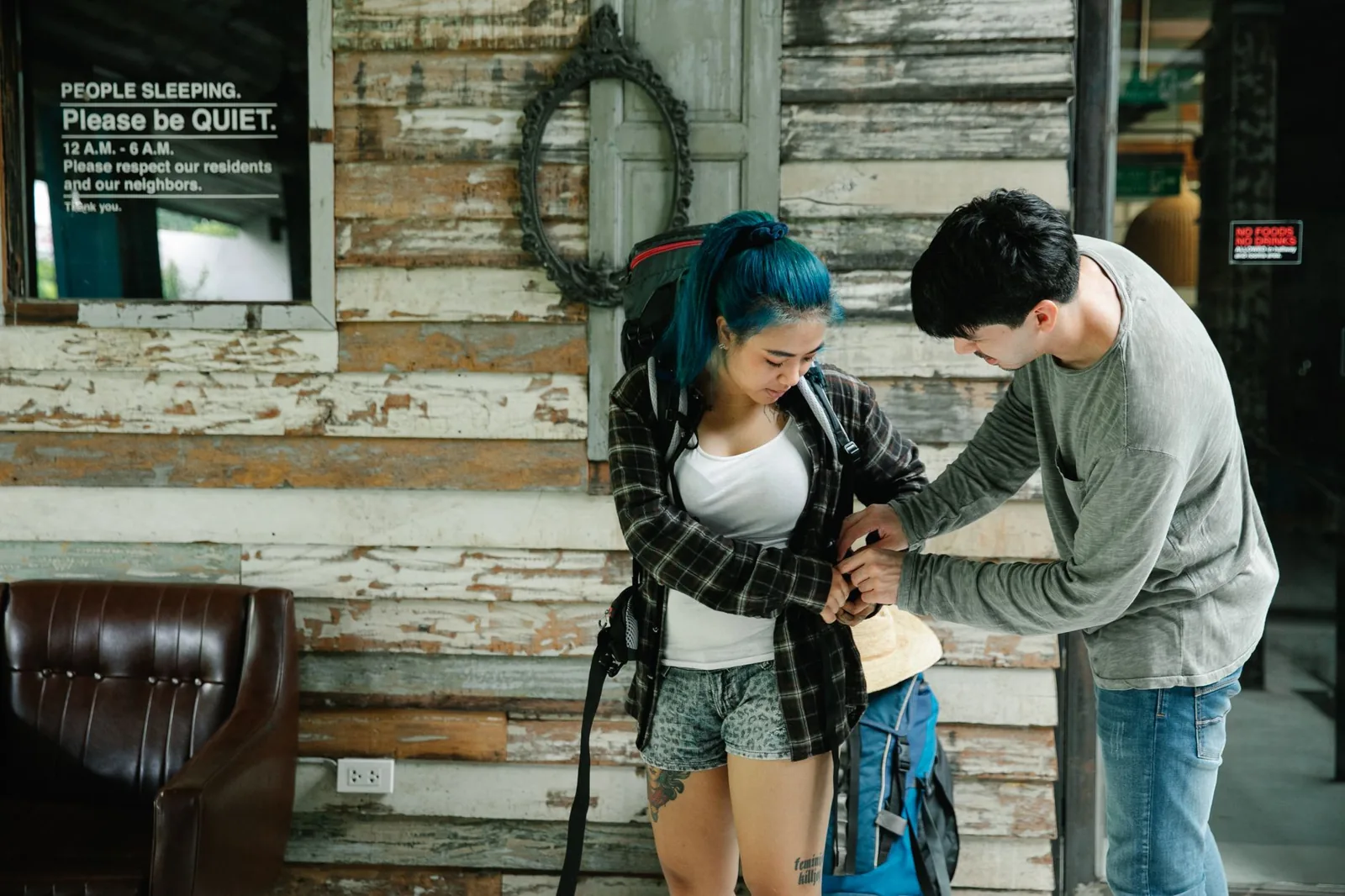
Photo by George Pak via Pexels
Eating Well for Less on the Road
Food is the easiest budget line to wreck, because eating is emotional and you’re tired. The fixes are simple, local, and honestly more fun than the tourist menu.
Eat where locals form a line. Street stalls and market food are cheap, fast, and usually the best meal you’ll eat all week. In cities like Bangkok, Penang, or Mexico City, a $3 made-to-order plate beats a $15 tourist-restaurant copy.
Shop at markets. Breakfast from a bakery or fruit stall costs a dollar or two. Buying snacks, water, and simple meals from a supermarket or wet market instead of convenience stores saves real money week after week.
Use the hostel kitchen. Even cooking two dinners a week — pasta, eggs, and whatever’s cheap at the market — shaves serious cash off your loop, and it’s where you make friends.
Water. Refill from filtered stations instead of buying plastic bottles. A $20 filter bottle pays for itself in about two weeks in most countries.
Skip the tour-bus lunch stop and the “recommended by your driver” restaurant. Both are commissions, not cuisine.
Packing and Gear That Save You Money
The right bag is boringly cheap insurance. Oversize bags trigger airline fees, and buying things on the road at tourist prices adds up fast.
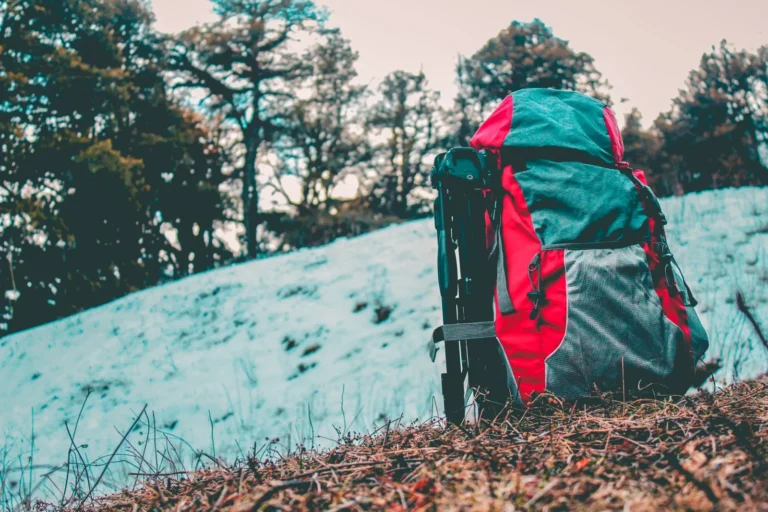
Pack a 35 to 50 liter bag and keep it light. Clothes you can layer beat clothes you can check. Merino or quick-dry tees go four days without a wash, so you carry four shirts instead of ten.
Don’t over-buy gear before you leave. Most “travel gadgets” gather dust. What actually earns its weight:
- A universal plug adapter rather than a new one per country
- A lock for hostel lockers
- Quick-dry towel (most guesthouses charge for towel rental)
- A reusable water bottle and a small med kit with basics, since a $12 pharmacy run beats a $90 clinic visit for a scrape
Avoid checking luggage. Besides the fees, lost bags on multiday itineraries are a budgeting emergency in themselves.
Staying Safe and Avoiding Hidden Costs
The fastest way to blow a travel budget is an avoidable incident: a missed flight, a stolen phone, or a hospital visit without insurance.
Get travel insurance. Yes, it costs money upfront ($1 to $3 a day), and yes, it saves you thousands when a scooter spill in Chiang Mai turns into a hospital stay. Budget travelers skip it and then crowdfund their own rescue; don’t be that person.
Protect your passport and cards. Keep a scanned copy in your email, carry a second payment card separately from your wallet, and know your bank’s fraud line. A blocked card abroad with no backup is a week of stress.
Watch the small fees. ATM withdrawal fees of $5 to $8 add up if you take out $40 at a time. Withdraw larger amounts less often, use cards with no foreign transaction fees, and always choose to be charged in local currency rather than your home currency — the dynamic conversion rate is a hidden markup.
Finally, check the visa and entry rules for every country in your loop before you book a single flight. A $30 visa-on-arrival fee multiplied across five countries is a line item, not a surprise.
Frequently Asked Questions
How much money do I need for backpacking on a budget?
That depends on the region. In Southeast Asia, $25 to $40 a day covers a dorm bed, street food, and local transport comfortably. In Western Europe, plan on $60 to $100 a day for the same lifestyle. A common full-time budget for a year of slow backpacking is $12,000 to $20,000 excluding flights home.
Is backpacking cheaper than regular travel?
Usually, yes — not because of magic, but because you commit to dorms, buses, and local food rather than hotels, taxis, and sit-down restaurants. The per-day savings are largest in expensive countries and smallest where everything is already cheap.
What is the cheapest country for backpacking?
Vietnam, Laos, Cambodia, and Nepal are persistent favorites, with Guatemala and Bolivia strong in the Americas and Albania leading Europe for value. Costs shift with exchange rates, so check current prices rather than old blog figures.
How do I save money on hostels?
Book direct or through comparison sites, choose 6- to 8-bed dorms, travel in shoulder season, and book only your first two nights so you can shop around or negotiate in person. Work exchanges and house-sitting can cut lodging costs to zero.
Do I need travel insurance for budget backpacking?
Yes. At $1 to $3 a day it’s cheap relative to what it protects. Emergency medical care, evacuation, theft, and trip-cancellation coverage are all cheaper than the alternative, and some countries won’t admit you reliably without proof of coverage.
The Bottom Line
Backpacking on a budget is a system, not a sacrifice. Pick a cheap region, book transport early but beds flexibly, eat where the locals eat, carry a light bag, and keep a cushion for bad days. Do that and you can travel for months on what a week of mid-range resorts costs.
You don’t need to be rich to see the world — you need to be intentional about where the money goes. Budget first, then book. If you’re ready to stretch every dollar further, start with our guides to how to travel on a budget and travel hacking with credit cards. For ground-level detail and honest route advice, Lonely Planet’s budget travel section is worth bookmarking before you commit to an itinerary.