Multi Day Hike Gear List: Everything You Need for a Backpacking Trip
A multi day hike gear list is the difference between a trip you remember fondly and one you spend every mile regretting. Carry too much and your pack grinds you down by lunch on day two. Carry too little and you are cold, hungry, or off trail with no way to signal help. The goal is a kit that keeps you warm, dry, fed, and found while staying light enough that you still enjoy the walk.
Pack weight matters because it compounds. A 40-pound pack feels fine for the first hour and miserable by hour six, especially when 2,000 feet of climbing stands between you and camp. The people who backpack happily year after year are almost always the ones who cut their base weight (everything except food, water, and fuel) down to 18 pounds or less. This multi day hike gear list gives you the core items, the weights to aim for, and the places where you can safely save money.
The Big Three: Shelter, Sleep System, and Pack
These three items drive most of your weight and cost, so they are where careful choices pay off first. Replace any one of them with something lighter and you feel the difference immediately.
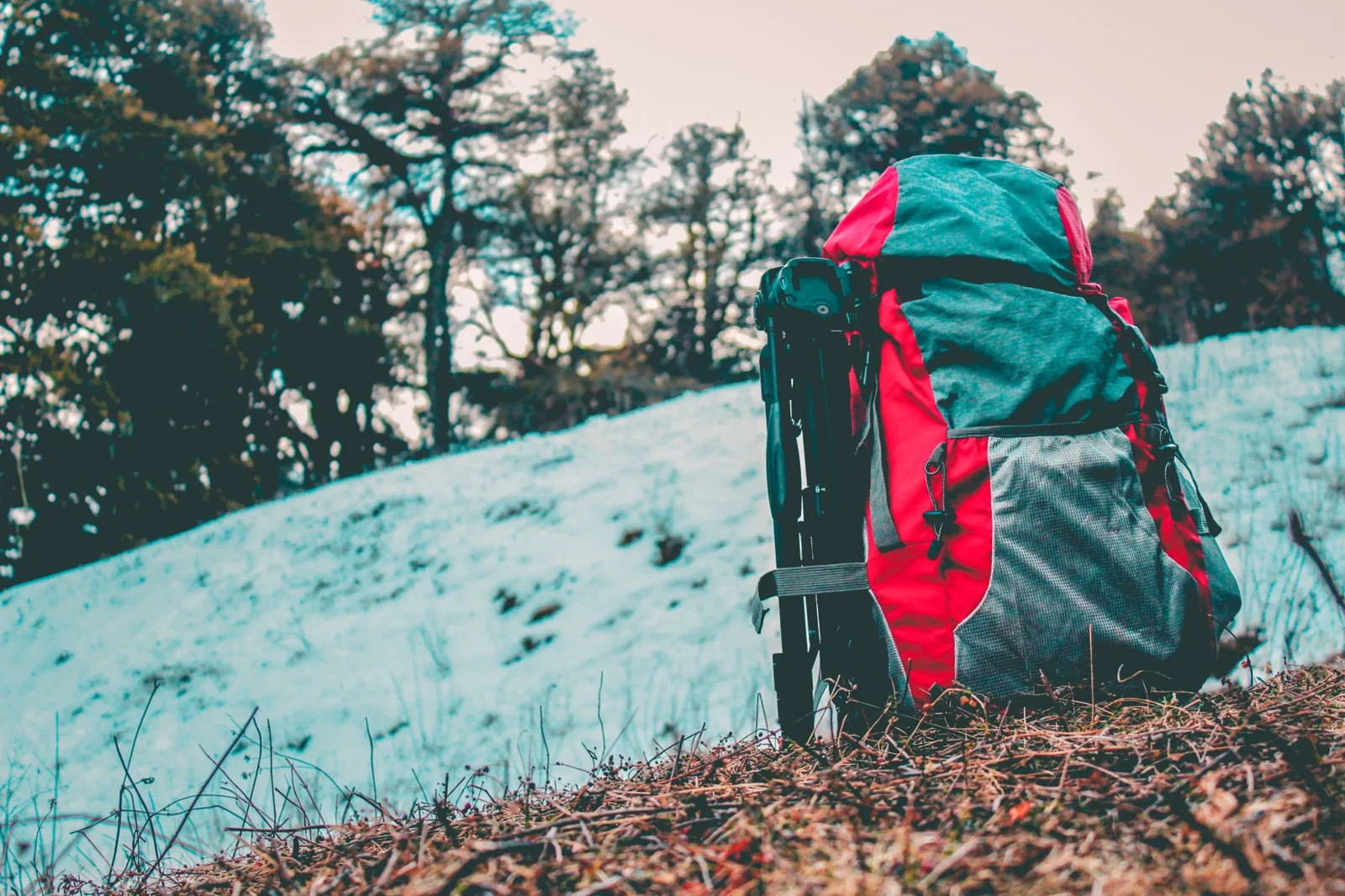
Backpack. For a three-to-five-day trip, a 50- to 65-liter pack is the sweet spot. Look for a framed pack with a real hip belt, because your hips, not your shoulders, should carry 70 to 80 percent of the load. Popular all-around choices include the Osprey Exos 58 Pro (about 2 pounds, 4 ounces) and the Gregory Focal 58. Budget options like the REI Co-op Trailmade 60 weigh more but cost under $150. A pack that fits well lets you skip dozens of strap adjustments each day.
Shelter. Most first-time backpackers use a freestanding two-person tent, which gives you room to spread out and keeps bugs off you. The Big Agnes Copper Spur HV UL2 (roughly 3 pounds with stakes) is a long-time favorite, but you can drop below 2.5 pounds with a trekking-pole tent like the Durston X-Mid 2 while saving $200 or more. Hammock setups work well in the eastern U.S. where trees are everywhere; they are a poor choice in open desert or alpine terrain.
Sleep system. A down sleeping bag or quilt rated 10 to 20 degrees Fahrenheit (for three-season trips) paired with an insulated sleeping pad is the standard. Down costs more than synthetic but packs smaller and lasts longer if kept dry. You need the pad for insulation from the ground, not just comfort; an R-value of 3 or higher covers most snow-free conditions. The Therm-a-Rest NeoAir XLite and NEMO Tensor are the pads most long-distance hikers reach for.
Clothing and Footwear for the Trail
Clothing is where beginners blow their pack weight fastest, because the instinct is to pack for every possible weather scenario. Instead, build a layering system and accept some compromises.
Footwear. Trail runners (Altra Lone Peak, Hoka Speedgoat, or Brooks Cascadia) have replaced heavy leather boots for most three-season backpacking because they dry fast and blister less. Switch to waterproof boots only for deep snow or constant cold mud. Whatever you choose, break them in on day hikes first and bring clean, dry socks as a non-negotiable luxury.
Layers. You need three layers sorted: a base layer against your skin, a mid layer for warmth, and a shell against wind and rain. Merino wool or a quality synthetic keeps you warm even when wet; avoid cotton, which holds moisture and chills you. A down or synthetic insulated jacket for camp and a lightweight rain jacket round out the system. Darn Tough or Smartwool socks, a warm hat, and lightweight gloves finish the list.
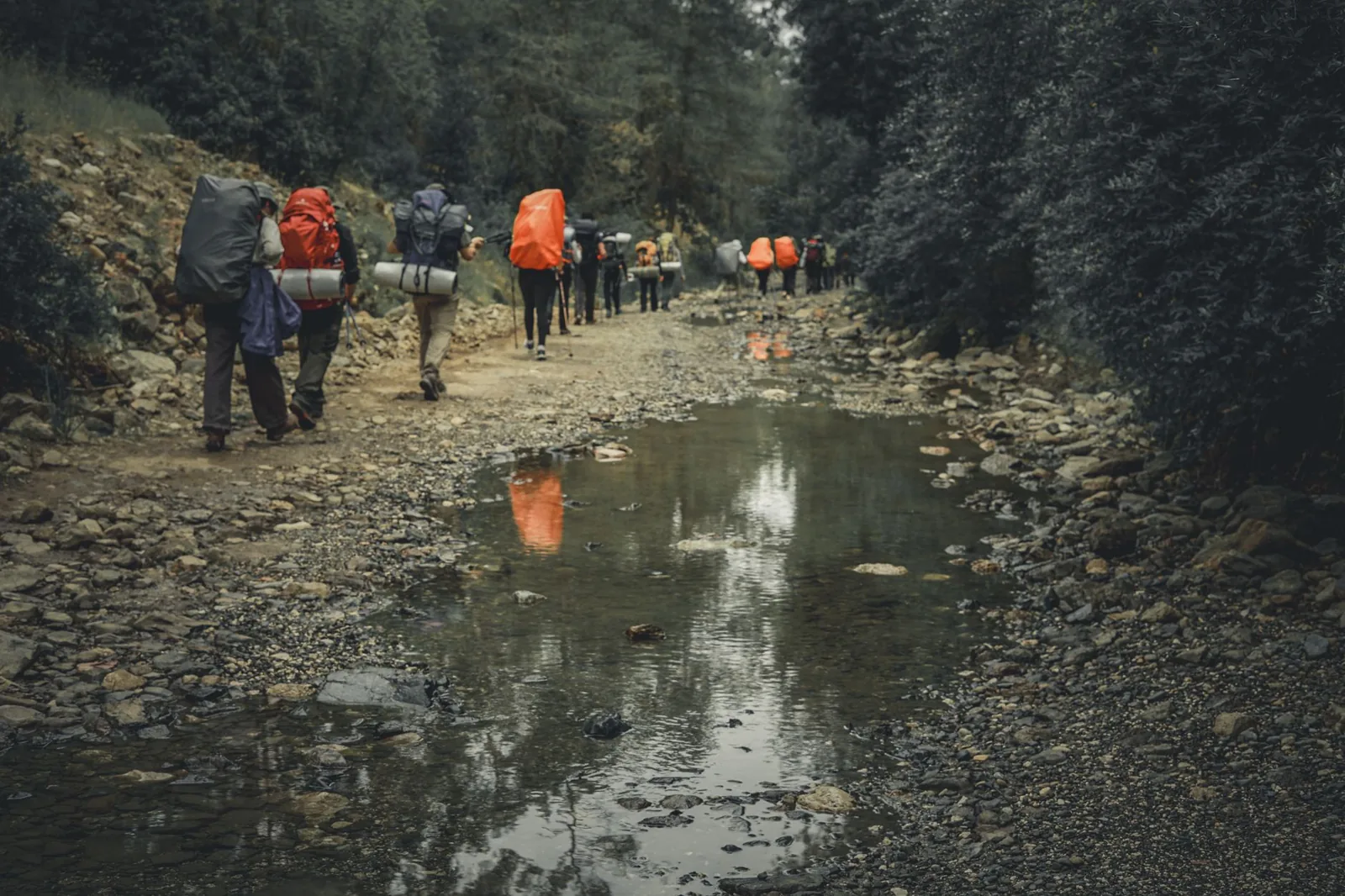
Photo by Serhat Yardimci via Pexels
The one-spare rule. Bring one extra pair of socks and one extra base layer top, and no more. Wear the rest in rotation and wash at camp streams (away from water sources) or in town. Nearly everyone overpacks shirts and pants on their first trip; you can smell bad for three days and be fine.
Kitchen, Water, and Food
You need roughly 1.5 to 2 pounds of food per person per day on a multi day hike, planned as compact, high-calorie meals rather than bulky fresh groceries.
Cooking system. An isobutane canister stove like the MSR PocketRocket 2 or a Jetboil Flash weighs under 5 ounces and boils water in minutes. For a solo trip, bring one pot (600 to 900 ml), a long-handled spoon, and a fuel canister sized for your number of meals. Cold-soak setups and no-cook meal plans let you drop the stove entirely, which saves close to a full pound.
Water. Filter, don’t carry. A Sawyer Squeeze or Katadyn BeFree lets you refill from streams and lakes, so you only haul about one liter at a time instead of four. Always check the water report for your route first, and carry purification tablets as a backup for murky sources or possible contamination.
Meal planning. Count breakfast, lunch, dinner, and two snacks per day. Dehydrated backpacker meals from Peak Refuel or Good To-Go are convenient but run $9 to $14 each; ramen, instant potatoes, peanut butter, tortillas, and trail mix get the same calories at a fraction of the cost. Aim for 2,500 to 3,000 calories per day on strenuous routes.
Navigation, Safety, and First Aid
The lightweight gear is the easy part. The safety gear is what brings you home when the weather turns or the trail disappears.
Navigation. Carry a map and compass and know how to use them, even if you also rely on your phone. The FarOut app and Gaia GPS are excellent for tracking, but batteries die and screens break. Download offline maps for your route before you lose signal, and keep your phone in airplane mode to stretch the battery.
Emergency communication. For solo and remote routes, a Garmin inReach Mini 2 or similar satellite messenger is the single most valuable piece of insurance you can carry. It weighs under 4 ounces and lets you send check-ins and trigger a rescue from anywhere. Your solo route is the rare place where this is worth the roughly $400 entry price plus a monthly plan.
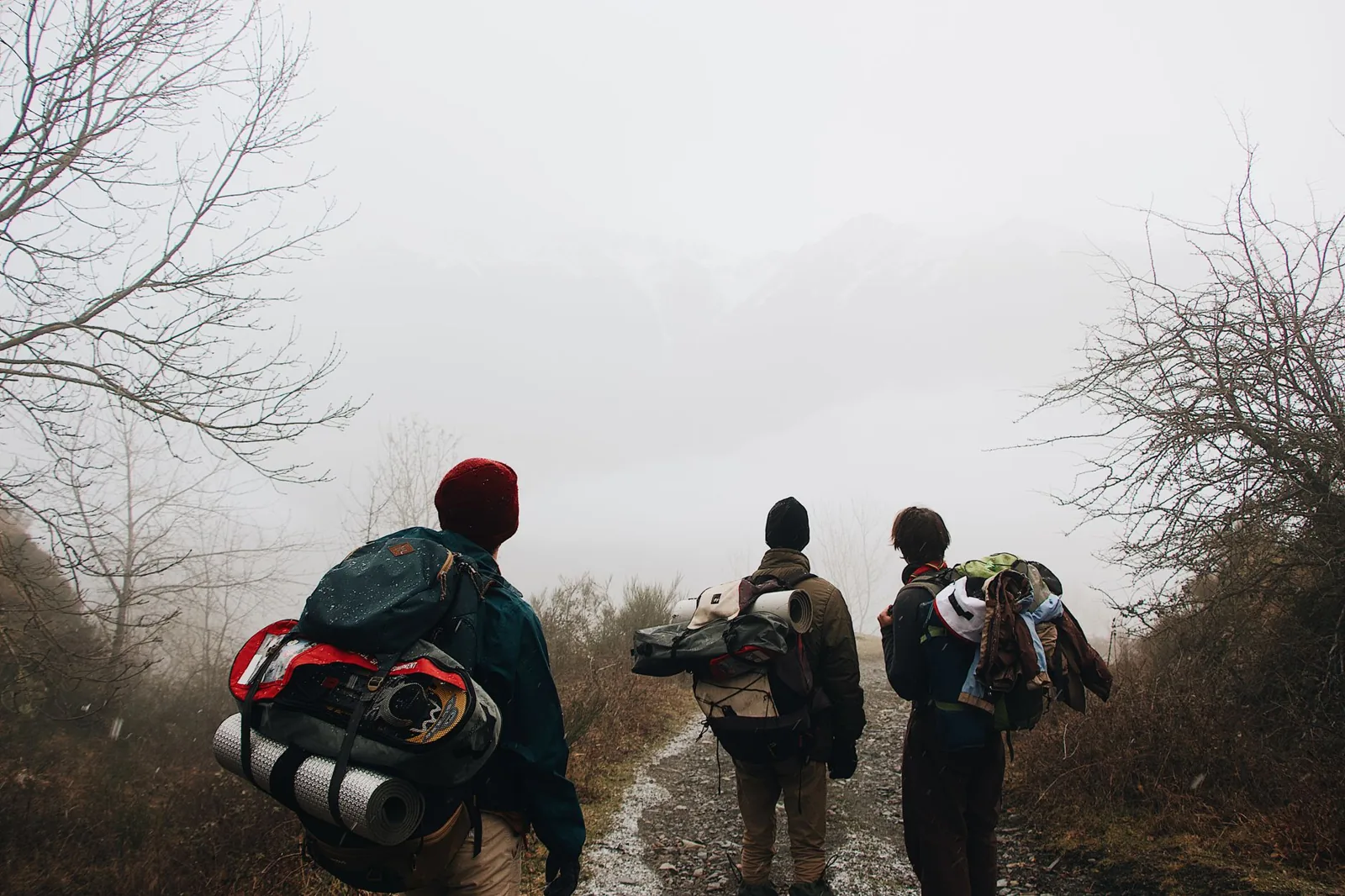
Photo by Pexels via Pexels
First aid and essentials. A small first aid kit with blister tape (Leukotape is the standard), ibuprofen, antihistamine, and a few bandages covers most real injuries. Add a headlamp (Petzl Actik Core or a Fenix), a small knife or multitool, a lighter and waterproof matches, sunscreen, and bug repellent. Two common beginner mistakes are skipping a headlamp and skipping rain protection; both end trips.
Electronics and Personal Items
Keep this section ruthlessly small. The fun of a multi day hike is partly that you do not need most of what you carry in daily life.
- Power. A 10,000 mAh battery bank recharges your phone and headlamp two to three times and weighs about 6 ounces.
- Hygiene. Toothbrush, travel toothpaste, a small item of biodegradable soap, and a lightweight trowel for digging cat holes 6 to 8 inches deep at least 200 feet from water.
- Repair. Ten feet of duct tape wrapped around a trekking pole, a needle and thread, and a spare buckle or two can fix most gear failures.
- Luxuries. A book, a camera, or a camp chair (the Helinox Chair Zero weighs a pound) are the items people drop last after a few hard trips.
Cutting Weight from Your Multi Day Hike Gear List
| Factor | Traditional Choice | Lightweight Choice |
|---|---|---|
| Pack | 65 L framed, ~4.5 lb | 50-58 L framed, ~2 lb |
| Shelter | Freestanding 2P tent, ~3.5 lb | Trekking-pole tent, ~2 lb |
| Sleeping bag | Synthetic, ~3.5 lb | Down quilt, ~1.5 lb |
| Cooking | Full kit with pots and mug | Single pot + canister stove |
| Total base weight | 20-25 lb | 12-16 lb |
Trimming your multi day hike gear list is a process, not a one-time purchase. Weigh every item on a kitchen scale, write it down, and look for the heaviest thing you can remove or replace first. A $40 scale saves you more weight than a $400 tent upgrade when it forces you to actually see the numbers.
Frequently Asked Questions
How heavy should my pack be for a multi day hike?
Aim for a base weight (everything except food, water, and fuel) of 15 to 20 pounds for a comfortable three-season trip. Your total pack weight with food and water should stay under about 25 percent of your body weight, ideally less.
What is the biggest mistake first-time backpackers make?
Overpacking clothes and food. Bring one spare outfit and about 1.5 to 2 pounds of food per day, and resist the urge to add “just in case” items that duplicate gear you already carry.
Do I need a water filter or can I carry all my water?
Filter. Hauling three to four liters is one of the fastest ways to ruin a trip, and a Sawyer Squeeze or Katadyn BeFree weighs only a few ounces and filters hundreds of gallons.
Is a tent or a hammock better?
It depends on terrain. A freestanding tent works almost anywhere, while a hammock is lighter and more comfortable in heavily forested areas but useless in desert, alpine, or above-treeline terrain.
Do I need a satellite messenger for a solo trip?
Yes, for remote or off-the-grid routes. A Garmin inReach Mini 2 adds four ounces and the ability to summon help from anywhere, which is cheap insurance when you are hiking alone.
The Bottom Line
Build your multi day hike gear list around the Big Three, keep clothing to a working layering system, and treat every extra ounce as weight you will carry uphill. You do not need to spend $2,000 to start: a used pack, a budget trekking-pole tent, and a $35 travel budget for food will get you on trail this weekend.
The items that earn their place after a few trips are the ones that make you safer or drier, not the ones that look good in a gear room. If you are planning your first solo overnight, pair this list with a few solo travel safety tips and start slow with a one-night shakedown trip close to home. For route ideas and longer itineraries, the Lonely Planet trekking guides and the US News travel rankings are solid places to compare destinations and seasons before you commit. You will learn more from one rainy night on the trail than from any amount of reading, so keep the kit light and go.