How to Travel Europe by Train: Routes, Passes, Costs, and Booking Tips
If you want to see more than one country on a single trip and skip the airport, learning how to travel europe by train is the single best upgrade you can make to a European itinerary. Trains run from city center to city center, there is no baggage fee or 90-minute security line, and the view out the window is often the best part of the day. A rail network that is dense, fast, and usually on time means you can wake up in Amsterdam, eat lunch in Brussels, and be in Paris well before dinner.
The catch is that there is no one right way to do it. A Eurail pass saves some travelers hundreds of dollars and wastes money for others. Booking too late turns a cheap regional ticket into a shockingly expensive one. This guide covers the routes worth taking, what tickets and passes actually cost, and how to book so you don’t overpay.
How to Travel Europe by Train: Choosing Your Route
Europe’s rail system is not a single network but a patchwork of national operators — SNCF in France, Deutsche Bahn (DB) in Germany, Trenitalia in Italy, Renfe in Spain, ÖBB in Austria, and SBB in Switzerland — linked by cross-border services. That patchwork means route planning matters as much as countries themselves.
The classic first-trip corridor connects London, Paris, Brussels, Amsterdam, and Cologne. It’s fast, easy to book, and forgiving for beginners. High-speed trains (Eurostar, Thalys, and ICE) link all five cities in under four hours each, and the region is so well served that you rarely need a reservation more than a day in advance outside summer.
For scenery, the stretch between Switzerland and northern Italy is hard to beat. The Bernina Express from Chur to Tirano crosses the Alps at a glacial pace, while the Glacier Express (Zermatt to St. Moritz) is the most famous slow train anywhere. Neither is a transport decision as much as an attraction you pay for twice: once for the ticket and once for the seat reservation.
Pick one logic and commit to it: a city-hopping loop (a few capitals linked by fast trains), a regional deep dive (one country or region, slow trains all the way), or a scenic route itinerary built around specific mountains-and-lakes journeys. Mixing all three on a short trip usually means spending more time on platforms than anywhere else.
Eurail Passes vs. Point-to-Point Tickets
The biggest decision when figuring out how to travel Europe by train is whether a rail pass is worth it. Eurail sells a Global Pass covering 33 countries, sold in fixed or flexible travel-day bundles. As of 2025, a 3-days-in-1-month adult second-class Global Pass runs roughly $290 to $330 depending on the season, while a continuous 15-day second-class pass is around $600 to $650.
Here’s how the two approaches stack up:
| Factor | Eurail Global Pass | Point-to-Point Tickets |
|---|---|---|
| Flexibility | Hop on most trains any travel day | Locked to a specific train unless you buy flexible fares |
| Cost on busy/flexible trips | Often cheaper than last-minute tickets | Cheaper when booked 1–3 months out |
| Seat reservations | Extra, up to €10–€30 on high-speed and night trains | Usually included in the ticket price |
| Night trains | Needs a separate reservation fee | Bought as a single ticket |
| Best for | Multi-country, flexible itineraries | Fixed itineraries with early bookings |
The pass rarely wins on pure price if you’re willing to book every leg weeks ahead. Point-to-point tickets start as low as €10 to €19 for a Paris–Brussels Thalys seat, €29 for a Paris–Lyon TGV, or €17.90 for a Vienna–Budapest Railjet when booked early. Compare that against a pass travel day that effectively costs €60 to €100 once you factor in what you paid per travel day.
Where the pass genuinely saves money is flexibility and the expensive countries: Switzerland, Austria, and Scandinavia rarely offer cheap advance fares, so a pass travel day can beat paying €60 to €90 for a short Swiss hop. If your itinerary is still open or you hate being locked to a 7:42 a.m. departure, the pass earns its price. If you can commit to dates now, buy point-to-point. For a deeper cost breakdown, read our guide to how much a Eurail pass costs and our look at whether the train beats flying on price.
How to Book European Train Tickets
Book directly with the operator whenever you can. Third-party sites such as Omio, Rail Europe, and Trainline are fine for searching across countries and often easier for mixed itineraries, but they add a booking fee (typically €1 to €5) and, more importantly, make refunds and schedule changes harder to chase down. If a direct booking exists, take it.
For France, buy SNCF TGV and Ouigo tickets at sncf-connect.com; for Germany, bahn.com; for Italy, Trenitalia or Italo; for cross-border legs, use the operator of the country where the train originates. Rail Europe and The Man in Seat 61 are the two resources worth keeping open for schedules and route quirks in countries with less polished booking sites.
Three rules prevent most booking mistakes: book 1 to 3 months out for high-speed trains (highest fares kick in close to departure), watch for regional tickets that never sell out (Swiss and Austrian regional trains are flat-priced and don’t need advance booking), and buy seat reservations the moment you’ve committed to a date during summer, because high-speed and night trains in France, Italy, and Spain do sell out.
What Train Travel in Europe Actually Costs
Real budgets help more than vague advice. For a budget traveler using advance fares and the occasional regional train, plan on €35 to €70 per travel day in Western Europe. Mid-range travelers who want reasonable departure times on high-speed trains should budget €80 to €120 per travel day. Add €20 to €45 for a couchette or sleeper on a night train.
Some concrete 2025 reference prices to anchor your planning:
- Paris to Amsterdam (Thalys): €35 to €49 early, €120+ late.
- Berlin to Prague (EuroCity): €19 to €35 advance, roughly €70 walk-up.
- Rome to Florence (Frecciarossa): €19.90 to €39 advance on Italo, over €70 last minute.
- Vienna to Budapest (Railjet): €17.90 to €29 advance.
- London to Paris (Eurostar): from about £52 advance, frequently £130+ near departure.
- Zermatt to St. Moritz (Glacier Express): CHF 159 second class plus a CHF 49 seat reservation.
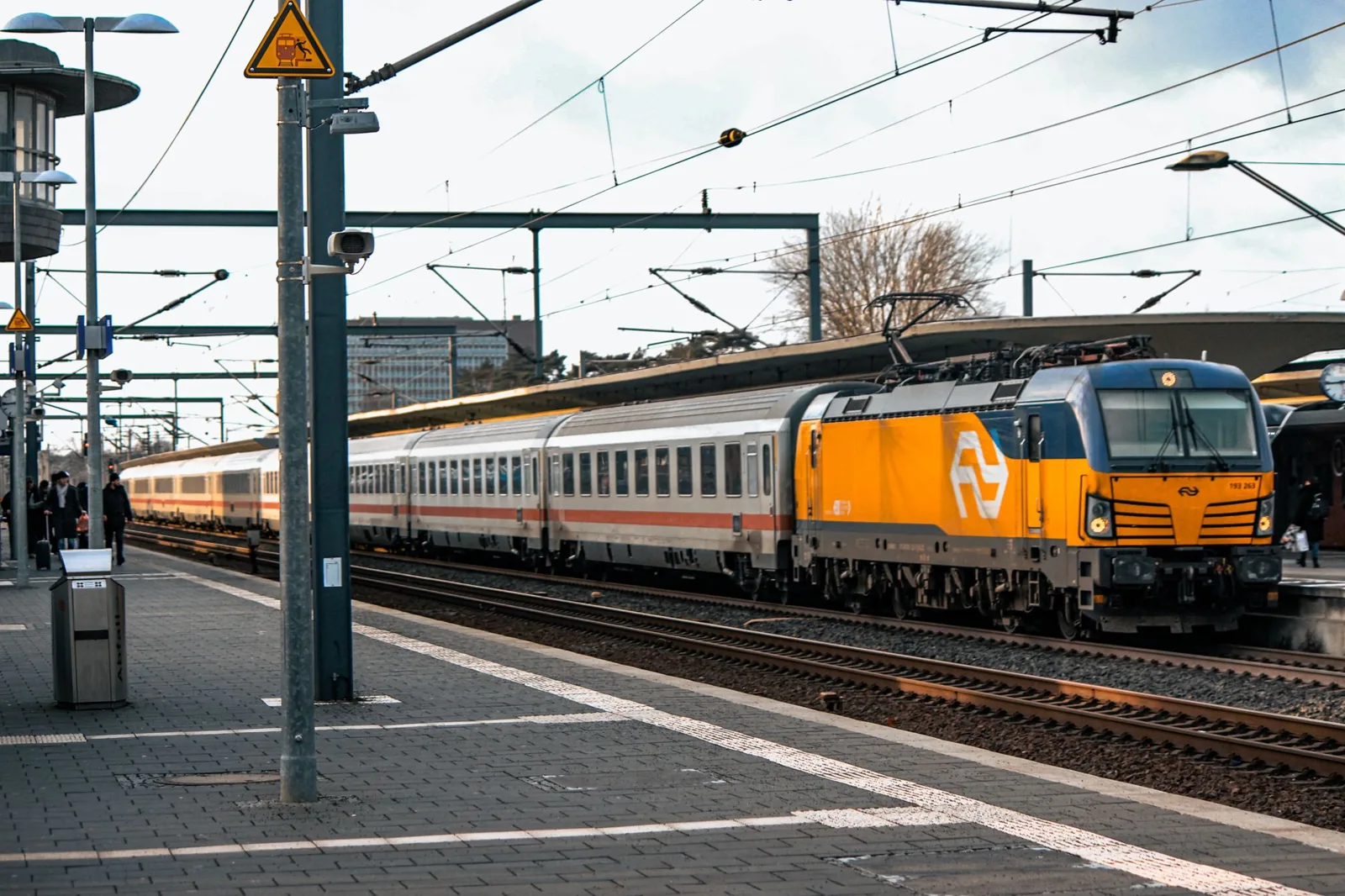
Photo by Korkut Mamet via Pexels
The single biggest cost lever isn’t the destination — it’s when you book. The difference between a €19 advance seat and a €139 last-minute seat on the same Vienna–Budapest train is real, and it repeats on nearly every high-speed corridor west of the Czech border. If you’re also weighing planes against trains for a given leg, here’s the full cost comparison.
First Class vs. Second Class, and When Reservations Are Mandatory
Second class is comfortable almost everywhere: reserved seats, decent legroom, and power outlets on most modern stock. First class buys wider seats, quieter cars, and occasionally a snack or drink, but on trips under three hours it’s rarely worth the 50% to 100% premium. The exceptions are long daytime trains (over five hours) and night trains, where a first-class or premium sleeper cabin is the difference between arriving rested and arriving wrecked.
Reservations matter more in the south and west. In France, all TGV and Ouigo trains require a reservation, which is included in the fare. Italy’s Frecciarossa and Intercity trains, Spain’s AVE, and most cross-border high-speed services work the same way. Germany, Austria, and Switzerland largely let you just board and sit down on their standard Intercity and regional trains — a big reason those countries are the easiest place to learn how to travel Europe by train without stress.
Night Trains and Scenic Routes Worth Planning Around
Night trains are back after nearly disappearing in the mid-2010s. ÖBB’s Nightjet network leads the revival, with sleepers running from Vienna and Zurich to destinations across Germany, Italy, and the Low Countries. A sleeper from Vienna to Venice or Zurich to Amsterdam costs roughly €59 to €160 per person depending on whether you take a seat, couchette, or private sleeper cabin — and saves a hotel night, which is where the value quietly comes from.
For scenery, budget time for the Bernina Express (Switzerland to Italy, a UNESCO-listed Alpine crossing), the Rhine Valley rail line between Bingen and Koblenz (castle after castle from a regular regional train), and Norway’s Oslo–Bergen line, which crosses a mountain plateau that feels like another planet. These are ordinary scheduled trains you can ride with a Eurail pass or a standard ticket; the scenic ones just add a small reservation fee.
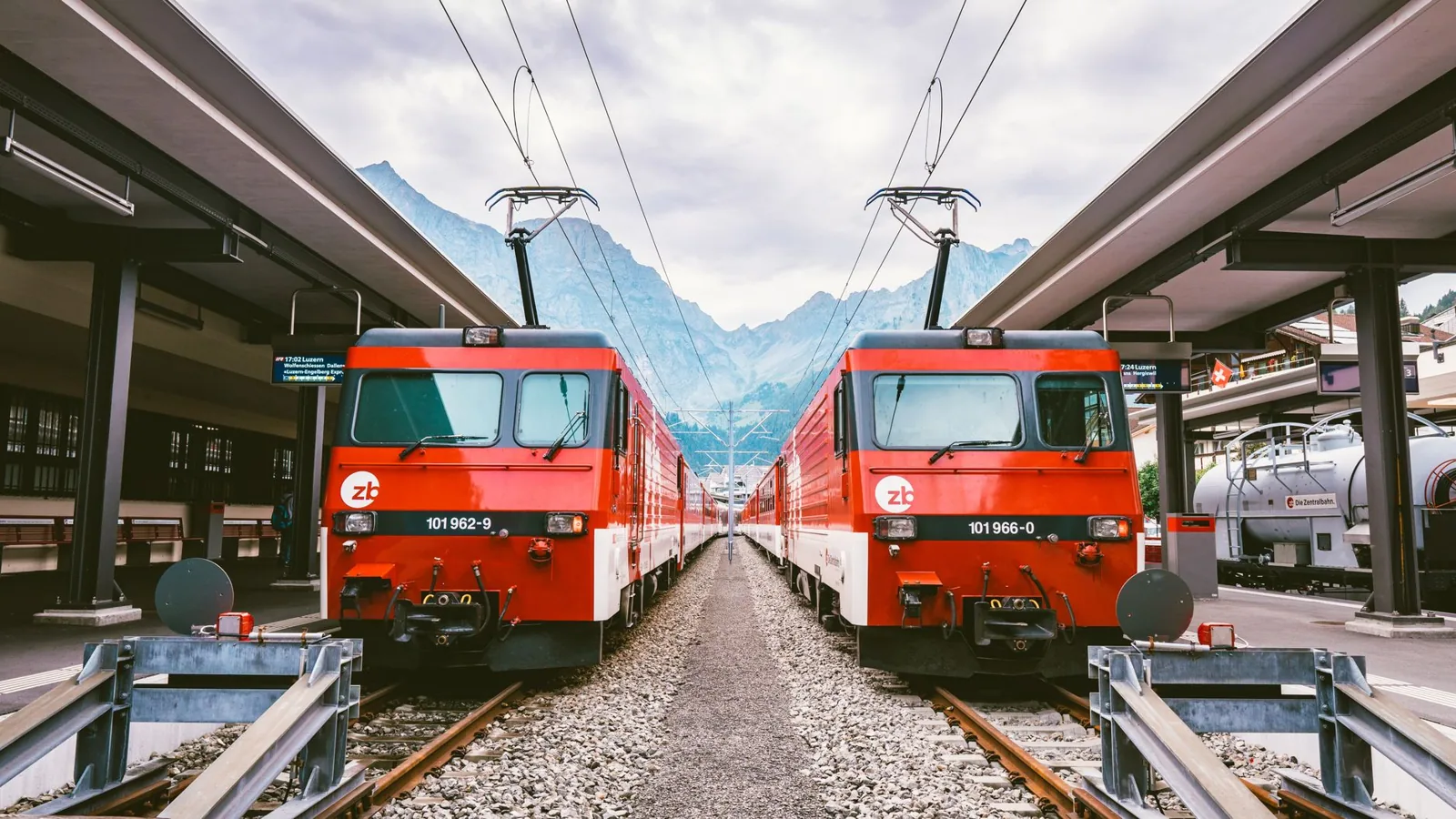
Photo by Chait Goli via Pexels
Don’t over-schedule scenic days. Two panoramic rail journeys on a two-week trip is plenty; stacking three or four turns what should be the relaxed highlight of the trip into a series of missed connections and rushed platform changes.
Frequently Asked Questions
Is a Eurail pass worth it for a two-week Europe trip?
It depends on your itinerary. If you’ll take six or more rail legs across several countries and value flexibility, a flexi pass usually breaks even. If you can book every leg a month ahead and your route is fixed, point-to-point advance fares almost always come out cheaper.
How far in advance should I book European train tickets?
For high-speed and cross-border trains, 1 to 3 months ahead gets the lowest fares. Regional and non-reservable trains in Germany, Austria, and Switzerland are flat-priced and can be bought the same day for the same amount.
Do I need seat reservations on European trains?
On France’s TGV, Italy’s Frecciarossa, Spain’s AVE, and most night trains, yes — usually included in the fare or a small add-on with a pass. On German, Austrian, and Swiss Intercity and regional trains, no.
Is train travel in Europe safe and easy for first-timers?
Yes. Stations are well signed, English is widely spoken at ticket counters and on board, and major operators have reliable apps with live departure boards. The main pitfalls are missed connections and booking fees from third-party sites, both easy to avoid.
Which European country has the cheapest train travel?
Hungary, the Czech Republic, and Poland consistently offer the lowest advance fares in the EU, while Switzerland is the most expensive. Booking in the cheaper eastern countries for a leg or two is a reliable way to lower an average per-day cost.
The Bottom Line
The best way to travel Europe by train is to book early, keep your route loose enough to enjoy it, and only buy a pass if that flexibility is worth more to you than the cheapest possible fare. Buy point-to-point when you can commit to dates; buy a Eurail pass when you can’t; and lean on Germany, Austria, and Switzerland when you want the lowest-stress first experience.
Start with one realistic corridor, lock in your high-speed legs and night trains first, and let the regional trains fill in the gaps as you go. That approach turns a rail trip from a logistics puzzle into exactly what it should be — the most pleasant way to cross a continent.
For next steps, compare train vs. plane costs on your specific route or check current Eurail pass prices before you commit to either.