
Budget Travel Tips for Beginners
Booking your first trip on a tight budget feels harder than it needs to. Airlines bury fees, hotels show one price and charge another, and every deal site claims to have the lowest fare. The good news is that budget travel tips for beginners come down to timing, planning, and a small set of habits that cost nothing to learn. Once you build them, the same moves save you money on every trip that follows.
This guide walks a first-timer through the choices that matter most: when to book, where to stay, how to eat, and how to shift your travel style so the money actually lasts. None of it requires being a digital nomad or a points obsessive. You just need a plan and a little discipline.
1. Set a Realistic Budget Before You Book
Most first-time budget travelers wing it and burn through the whole fund by day three. Fix the total first, then work backward. For a one-week trip within the United States, a realistic solo budget is roughly $1,100 to $1,500 including flights. In Southeast Asia or Eastern Europe, $600 to $900 covers a comfortable week without resorting to dorm beds. Split your money into four buckets — flights, lodging, food, and activities — and assign each a number before you spend a dollar.
Then track what you actually spend in a notes app or spreadsheet. Five minutes a day stops the slow leak of $8 coffees, $12 rideshares, and impulse souvenirs that quietly double a trip’s cost. The single most useful habit in budget travel is knowing where your money is going in real time.
2. Travel in the Off-Season or Shoulder Season
The calendar is your cheapest travel tool. Flying to Rome in August costs twice what the same trip costs in late October, and the crowds are twice as thick. Shoulder season — the weeks just before or after peak — usually delivers the best trade-off of decent weather, lower fares, and hotels that are actually trying to attract guests.
Concrete examples: Europe is far cheaper in April–May and September–October than in June–August. Caribbean and Mexico prices drop sharply in May–June and September–November, outside the winter and spring-break rush. If your dates are flexible, pick the shoulder window and watch the same budget suddenly cover a longer, calmer trip.
Photo by Tima Miroshnichenko via Pexels
3. Be Flexible on Dates and Airports
Flight price is mostly a function of demand, not distance. The day you fly and the airport you choose can move the fare by hundreds of dollars. Search with flexible dates instead of fixed ones — most booking engines, from Google Flights to Kayak, let you view a whole month at once and spot the cheap days in green.
A few rules that hold up well in practice:
- Fly midweek. Tuesday, Wednesday, and Saturday departures are consistently cheaper than Friday and Sunday.
- Compare nearby airports. A 45-minute bus from a secondary airport often beats a direct flight into the big hub.
- Book 1 to 3 months out for domestic trips and 2 to 6 months out for international ones.
- Set fare alerts. Let the price trackers watch while you wait, then book when it dips.
None of this is a “secret hack.” It is simply the same how to travel on a budget discipline that experienced travelers apply to every booking: check the whole month, compare nearby airports, and pull the trigger when the number is right.
4. Pick Budget-Friendly Accommodation
Where you sleep is the easiest place to overspend without meaning to. A $180 hotel room feels normal on vacation, but the same trip could cost half as much with a small trade in square footage. Hostels in Europe and Southeast Asia now routinely offer clean private rooms, not just bunk dorms, for $30 to $70 a night. Well-reviewed guesthouses, apartments through local booking sites, and rooms in family-run B&Bs all beat the big chains on price and usually on character.
Here is how the main options shake out for a solo traveler:
| Factor | Hostel Private Room | Budget Hotel / Guesthouse | Apartment Rental (per week) |
|---|---|---|---|
| Typical nightly cost | $30–$70 | $60–$120 | $55–$90 |
| Kitchen access | Often shared | Rarely | Yes |
| Social / local feel | High | Medium | Low |
| Best for | Solo travelers, 1–4 nights | Couples, short stays | Stays of 5+ nights |
For stays longer than four or five nights, an apartment with a kitchen pays for itself fast, because cooking just two meals a day can cut your food budget in half.
5. Eat Like a Local, Not a Tourist
Food is where budgets quietly die. Restaurants near major sights charge a premium because they can — a plate a block away from the main square frequently costs 30 to 50 percent less for the same dish. Walk ten minutes from the landmark, look for the place full of locals rather than menus in six languages, and let the crowd vote for you.
Some reliable money-saving habits for food:
- Eat your big meal at lunch, when set menus and specials are cheaper than the same kitchen’s dinner prices.
- Hit markets and grocery stores for breakfast and snacks instead of a $15 hotel buffet.
- In much of Europe and Asia, a street stall or market lunch runs $5 to $10 and is often the best thing you eat all week.
- Go easy on sit-down alcohol; a single cocktail can cost as much as an entire lunch in many cities.
Mixing a few self-catered meals with strategic splurges keeps the food budget sane without feeling deprived.

Photo by Pexels via Pexels
6. Use Public Transit and Walk
Taxis and rideshares are the fastest way to erase your daily budget. In London, a single rideshare across town can run £20 to £40, while the same trip on the Tube or bus is £2 to £5. Most European and Asian cities have transit systems that are cheap, safe, and easier to use than the apps would have you believe — cheap places to travel are almost always cheap because they have strong public transportation.
Three habits that add up over a week:
- Buy a multi-day transit pass on arrival instead of single tickets.
- Walk between nearby sights; in a walkable city, you see more and spend nothing.
- Download the city’s official transit app before you land so you are not guessing at ticket machines.
Walking and transit do more than save money. They turn travel into a way of actually seeing a place rather than glimpsing it through a car window.
7. Budget Travel Tips for Beginners: Pack Light and Smart
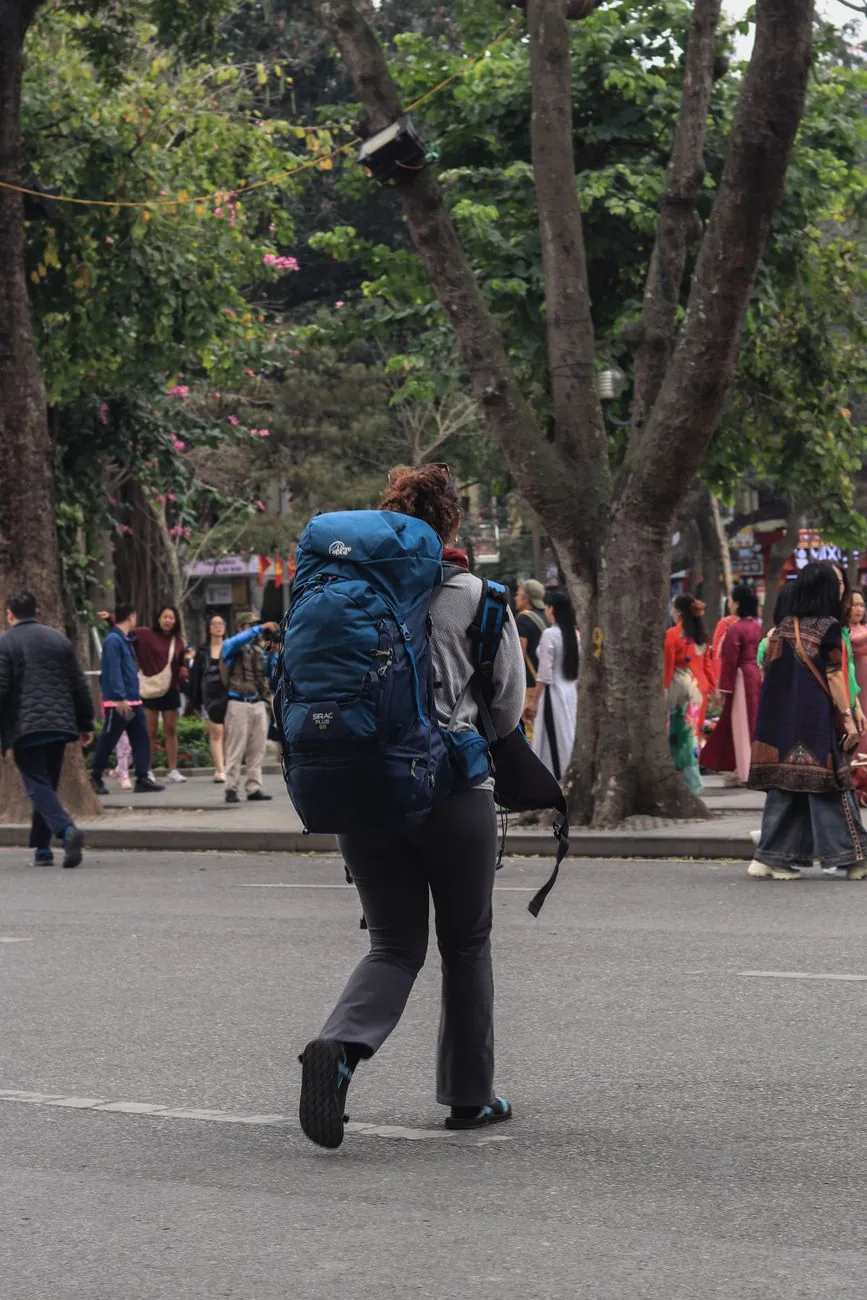
Budget airlines punish checked bags, and so do the hidden fees that surface at checkout. A $49 fare can become $120 once you add a checked bag, seat selection, and priority boarding. Packing a single carry-on sized bag — the kind that fits the 40-liter, under-20-pound limits on carriers like Ryanair, EasyJet, and Frontier — removes that surcharge entirely and speeds you through the airport.
Pack fewer clothes and plan to do a small load of laundry mid-trip. Most hostels and guesthouses have a washer, and river-washing a few quick-dry items takes ten minutes. Cutting one bag also means you can hop on and off trains and buses without paying for storage or a porter. This is one budget travel tip for beginners that pays off before the trip even starts.
If you want to stretch the same principle further, look into backpacking on a budget — carrying less is that style’s entire engine.
8. Use Travel Rewards and Cards Wisely
Travel credit cards sound like something for road warriors, but even a casual traveler can cover the cost of a flight every year or two just from normal spending. Cards with no annual fee still earn 1.5 to 2 percent back on purchases, and a solid sign-up bonus — often 50,000 to 75,000 points, worth $500 to $750 in travel — is often the single easiest discount a beginner can grab. One reliable source for comparing current offers is NerdWallet’s travel card roundup.
Two ground rules keep this from backfiring. First, never spend money you would not have spent anyway just to chase a bonus; the interest will swallow the reward. Second, pay the balance in full every month. If that is not realistic for you, stick to cash and a debit card — the “rewards” are not worth a 24 percent APR.
Frequently Asked Questions
How much money do I actually need for a first budget trip?
For one week, plan on roughly $1,100 to $1,500 in the U.S. or Western Europe, and $600 to $900 in Southeast Asia, Eastern Europe, or Central America. That covers budget lodging, local food, transit, and a few paid activities without dorm-room compromises.
What is the cheapest time to book flights?
Generally two to six months out for international trips and one to three months out for domestic ones, flying midweek and in the shoulder season. Use a flexible-date search and set a fare alert rather than trying to time a single “perfect” day.
Are hostels safe for first-time travelers?
Yes, largely. Most are clean, staffed around the clock, and offer lockers plus private rooms if shared dorms feel like too much. Read recent reviews, favor well-rated properties, and you will be fine — Lonely Planet’s hostel guide covers what to look for.
Does budget travel mean skipping the good stuff?
No. It means spending money on experiences instead of on markup. Eating a $6 market lunch, riding the local train, and staying in a family guesthouse often produces a more memorable trip than the all-inclusive buffet version — for a fraction of the cost.
Can I save money on a trip without traveling alone?
Absolutely. Group travel cuts costs per person on rooms, rentals, and even fuel on a road trip. Budget lodges and apartments with multiple beds make a friends’ trip cheaper than a solo hotel stay almost every time.
The Bottom Line
Budget travel is a skill, not a deprivation diet. Set a real number, travel in the shoulder season, stay flexible on flights, sleep where locals sleep, eat where locals eat, and pack light enough to dodge the fees. Each habit is small on its own; stacked together, they turn the same pile of money into a longer, better trip.
Start with one upcoming trip and pick three of these tips to actually use — flex the dates, book a kitchen-equipped room, and commit to carry-on only. The rest will follow once you watch the first trip’s budget hold. And when you are ready, come back for more specific strategies in our guide to how to travel on a budget, then start scouting your next destination.