High Speed Rail vs Flying: Which One Actually Wins?
The moment a trip crosses water or a national border, most travelers default to a flight without running the numbers. That habit costs time and money on corridors where a train is genuinely faster. High speed rail vs flying is not a philosophical debate — it is a simple math problem that changes depending on which route you are taking, how much luggage you carry, and what the trip is actually for.
On a short intercity hop, a plane can look quick on paper and lose badly once you add the airport trip, security line, boarding, taxiing, and the baggage carousel at the other end. On a 500-mile leg, the plane almost always wins. This guide runs the real numbers — cost, door-to-door time, comfort, reliability, and carbon — so you can pick the right option for your next trip instead of the one you always book by default.
Door-to-Door: Where the Train Hides Its Speed
Airlines quote flight time, not travel time. That distinction is where high speed rail wins trips that look unwinnable on a timetable. A flight from London to Paris is booked as one hour and twenty minutes. Door to door, the trip runs closer to four: an hour to get to and through Heathrow or Gatwick, check-in cutoffs, security, boarding, taxiing, deplaning, border control, and the train or taxi from Charles de Gaulle into central Paris.
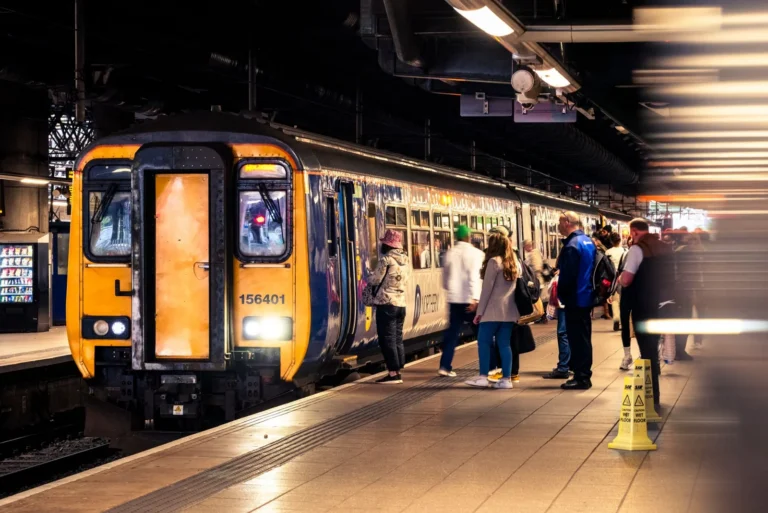
The Eurostar covers the same trip city-center to city-center in about two hours and twenty minutes. You arrive at St Pancras, sit down, and step off at Gare du Nord in the middle of both cities — no airport at either end of the journey.
The general rule holds on most corridors under about 400 miles: the train’s slower cruising speed is erased by the fact that it starts and ends downtown. Above that distance, the plane’s speed overwhelms everything else, even with airport overhead.
- Under 200 miles: the train almost always wins door to door.
- 200–400 miles: competitive — the outcome depends on the specific airports, cities, and your connection.
- Over 500 miles: flying wins on time unless the train is overnight.
High Speed Rail vs Flying: The Money
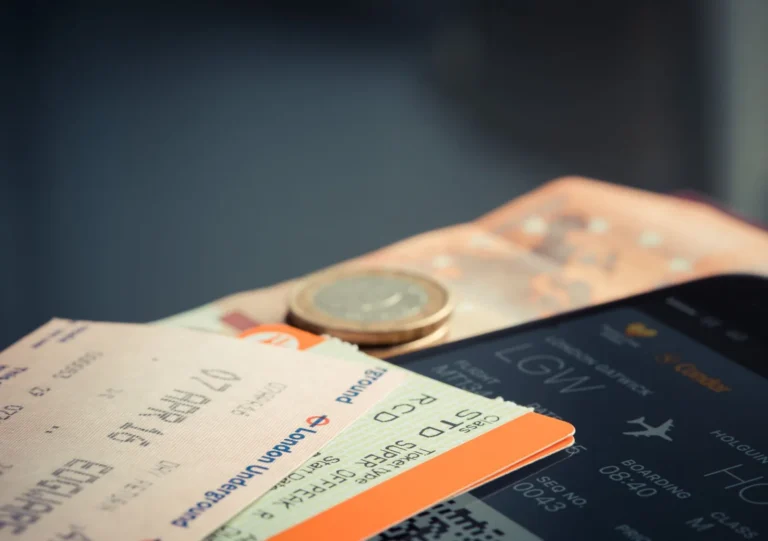
Sticker price rarely matches what you actually spend. A $39 advertised flight becomes $90 once you add a seat assignment, a carry-on, and the airport transfer, and a rock-bottom train ticket can cost triple that if you buy it a week out. Here is how the two modes compare on typical fares.
| Factor | High Speed Rail | Flying |
|---|---|---|
| Ticket price (advance) | $25–$90 on European and Asian corridors | $39–$150 for a comparable domestic hop |
| Baggage | 1–2 bags included at no charge | $30–$60 each way for a checked bag, carry-on fees on budget airlines |
| Getting to the terminal | You walk to a downtown station | $15–$60 taxi or train to an airport outside the city |
| Seat selection | Often free or a few dollars | $10–$40 on many carriers |
| Total, all-in (typical) | $45–$120 | $110–$250 |
On the New York–Washington, DC corridor, an Amtrak Acela one-way fare runs roughly $80–$250 depending on how early you book, while a shuttle flight can be cheaper on the base fare but adds airport time and transfer costs on both ends. In Japan, a Tokyo–Osaka Shinkansen ticket costs around ¥14,000–¥15,000, which is close to a discount domestic flight — until you price the train getting to Narita or Haneda and the luggage fees on the low-cost carriers flying that route.
For the cheapest rail fares, book early or use a pass. A Eurail pass can sharply cut per-trip costs if you are stringing together several European legs — see our breakdown of how to travel Europe by train and what a Eurail pass actually costs. On the flying side, budget carriers are only cheap if you travel with a personal item and accept whatever seat you are assigned.
Photo by Greece-China News via Pexels
Comfort, Baggage, and Getting Work Done
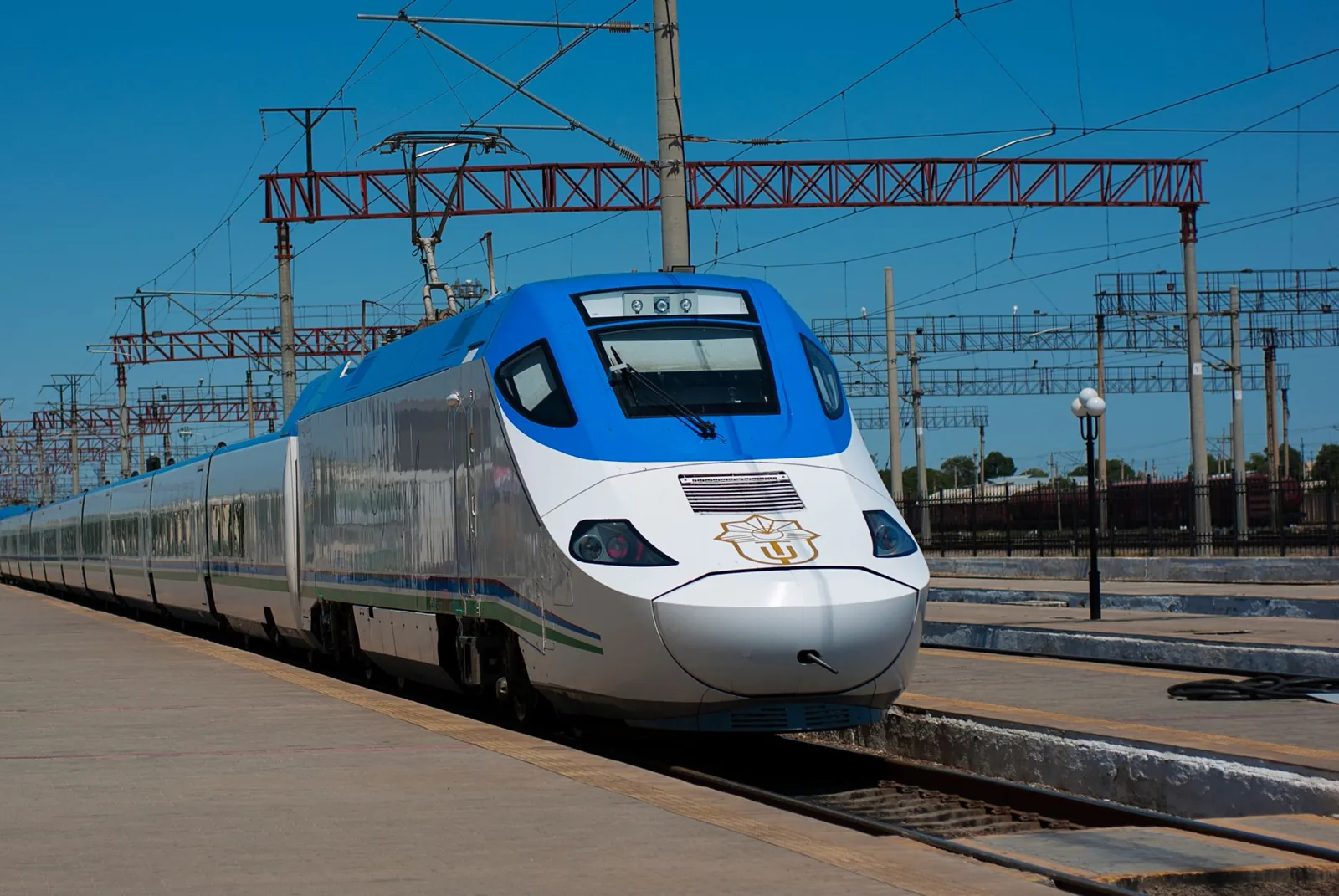
The single biggest quality-of-life gap is space. A high speed train seat is wider than most economy seats, with a real tray table, legroom you can actually use, and a window that is not an inch from your elbow. You can stand up, walk to a cafe car, and work on a table with nobody digging into your side.
Flying is a different physical experience entirely. The seat pitch on a short-haul economy flight is typically 28–31 inches, and that is before the person in front reclines. A laptop is a squeeze on a domestic tray table, and there is no reliable Wi-Fi on most short-haul aircraft.
- Work: the train wins — tables, power outlets, and usable legroom; plane Wi-Fi is patchy and unreliably priced.
- Baggage: the train wins — high speed operators generally do not charge or weigh bags the way airlines do.
- Motion sickness / comfort: a wash, but smooth rail beats turbulence for passengers who get queasy on descent.
- Amenities: trains have walk-up cafe cars; flights have a cart in the aisle and a $4 bottle of water.
If you are traveling for work, the train buys you back the working time that flying burns in security and boarding. That hour and a half is worth real money.
Reliability and On-Time Performance
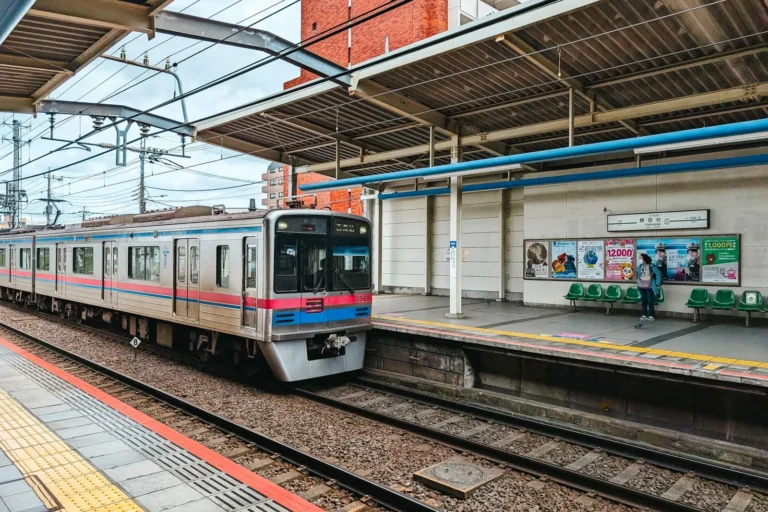
Weather hurts flying far more than it hurts rail. A thunderstorm over a hub like Chicago O’Hare or Dallas-Fort Worth cascades delays across the entire country, while high speed rail keeps rolling through the same conditions. Snow that cancels flights in the Northeast US seldom stops the Acela or the Shinkansen for more than a few minutes.
That is not to say the train is immune. European high speed operators deal with signal failures, track work, and the occasional strike, and strikes can shut a network down for a day at a time. But day to day, the numbers favor rail: Japan’s Shinkansen famously averages under a minute of delay per train when adjusted for weather and major disruptions, a record no airline on the planet comes close to matching.
The lesson is that the mode matters less than the operator and the season. A budget carrier on a busy summer Friday is a bigger delay risk than a mid-morning train on a dedicated high speed line.
Photo by Alari Tammsalu via Pexels
The Carbon Question
If you care about the emissions on your ticket, the choice is usually not close. A high speed train emits a fraction of the CO2 per passenger mile of a short-haul flight, because rail runs on electricity that can come from a grid that gets cleaner every year, while a jet burns kerosene the entire way.
The exact gap depends on the grid and the plane. Fill the plane and the picture improves; run the electricity on coal and the train’s advantage shrinks. But on a per-passenger basis, a modern electric high speed train on a decent grid produces roughly 80–90 percent less CO2 than an equivalent short-haul flight. High speed rail vs flying is a one-sided contest on this measure.
For a fuller treatment of where flights and trains actually differ on carbon-per-mile, The Points Guy has a useful breakdown of train versus plane emissions worth reading before you book.
When the Train Wins — and When It Doesn’t
The honest answer is that neither mode wins everywhere, and pretending otherwise leads to bad bookings.
Take the train when:
- The route is under 400 miles and has a real high speed line, like London–Paris, Madrid–Barcelona, NYC–DC, or Tokyo–Osaka.
- You are carrying more than a backpack.
- You need to work or want to walk around.
- You are connecting within a single region covered by a rail pass like the Japan Rail Pass.
Fly when:
- The trip is over 500 miles and time matters.
- There is water in the way and no tunnel, or the rail route is slow and indirect.
- You are feeding a long-haul itinerary from a big hub.
- The train fare is genuinely several times the flight, and you are leaving enough margin for airport overhead.
Frequently Asked Questions
Is high speed rail cheaper than flying?
It depends on the route and how you book. On corridors like London–Paris or Madrid–Barcelona, advance rail tickets often undercut the full cost of a flight once baggage and airport transfers are added. On longer legs or last-minute bookings, the flight usually comes out cheaper.
Which is faster, high speed rail or flying?
For trips under about 400 miles, high speed rail is frequently faster door to door because it runs from city center to city center with no security line or boarding taxi. Beyond 500 miles, the plane wins.
Does high speed rail have fewer delays than flying?
On average, yes. Trains are far less affected by weather, and operators like Japan’s Shinkansen post extraordinary on-time records. Strikes and signal failures do happen, but flying is more delay-prone day to day.
Is taking the train better for the environment?
Yes, by a wide margin. An electric high speed train typically emits 80–90 percent less CO2 per passenger than a comparable short-haul flight, though the gap varies with how the electricity is generated.
Do you need to arrive early for a high speed train?
No. Most operators recommend arriving 15–30 minutes before departure rather than the two hours airlines want. You can often walk up, board, and go.
The Bottom Line
High speed rail vs flying comes down to one honest question: what does this trip actually cost in time and money, door to door, not what does the booking screen say. Under 400 miles with a real high speed line, the train wins most of the time — faster end to end, more comfortable, better for working, and far lighter on carbon. Beyond 500 miles or across open water, the plane stops being the lazy default and becomes the right tool.
Before you book either way, run the real numbers with a quick look at our train vs plane cost comparison, which lays out the full door-to-door math side by side. The goal is not loyalty to a mode — it is the shortest, cheapest, least miserable trip you can find.